A specialized scientific AI platform for botanical ingredients, with a regulatory entry market
01 The problem
Botanical ingredient development is fragmented, data-intensive, experimentally expensive and hard to standardize. Specifications and their tests drew 711 of FDA’s 1,938 supplement-manufacturing citations in FY2025 (Part 1).
02 The technology
The proposed Large Botanical Model: specialized physics-informed models on one shared botanical data layer, returning predictions with uncertainty and traceable evidence.
03 The first market
Companies developing botanical ingredients that need regulatory, safety, manufacturing or formulation evidence, starting with model-assisted NDI and NDIN work.
04 The scale
One validated platform serving many ingredients, customers and applications, earning through regulatory solutions, platform licensing and owned ingredient technologies (business model).
This page is provided for information. It is not an offer to sell, or a solicitation of an offer to buy, any securities, and it is not investment, legal or tax advice. EUTECNIQ Sciences is a company in formation. It has no laboratory, hired staff, customers, revenue or patents of its own. The page states no amounts, raise size, valuation or projected returns, and every plan on it is a proposal that may change.
Company in formationPublished evidence is citedFounder-reported roles are labeled
The platform thesis
Not “help build a botanical laboratory”: fund a specialized quantitative AI platform with a regulatory entry market.
The platform thesis in nine lines
Problem
Botanical ingredient development is fragmented, data-intensive, experimentally expensive and hard to standardize.
Opportunity
A specialized scientific AI platform could help reduce avoidable experiments, organize safety evidence, speed development decisions and improve process and formulation design. These are hypotheses to be measured, not claimed results.
Technology
The Large Botanical Model: knowledge graph, molecular representations, specialized machine learning, first-principles simulation and uncertainty-aware optimization on one rights-cleared data layer.
Initial market
Companies developing new botanical ingredients and needing regulatory, safety, manufacturing or formulation evidence.
Initial product
Model-assisted ingredient and regulatory development intelligence, including NDI and NDIN workflows, delivered with qualified laboratories and CROs.
Defensibility
Lawfully generated and licensed experimental datasets, validated models, software, specialized workflows, potential patents and technical partnerships.
Revenue
Regulatory and development solutions first; platform licensing and subscriptions once modules are validated; owned ingredient technologies and licenses later.
Scale
One validated platform serving multiple ingredients, customers and scientific applications.
Investment
Milestone-based: each stage funded against model validation, customer adoption, technical capability and commercial performance; laboratory capital only after validated demand.
Current computational case studies are evidence of feasibility work, not proof of a trained, validated large botanical model. Information only; not an offer of securities. This page states no amounts, raise size, valuation or projected returns.
Why EUTECNIQ is different
A scientific AI company, not a contract lab
Regulatory and development projects would open the door and pay early bills. The business is the platform: validated models, data and workflows that serve many ingredients and customers, and later EUTECNIQ’s own ingredients and licenses. The full case, with the computed evidence.
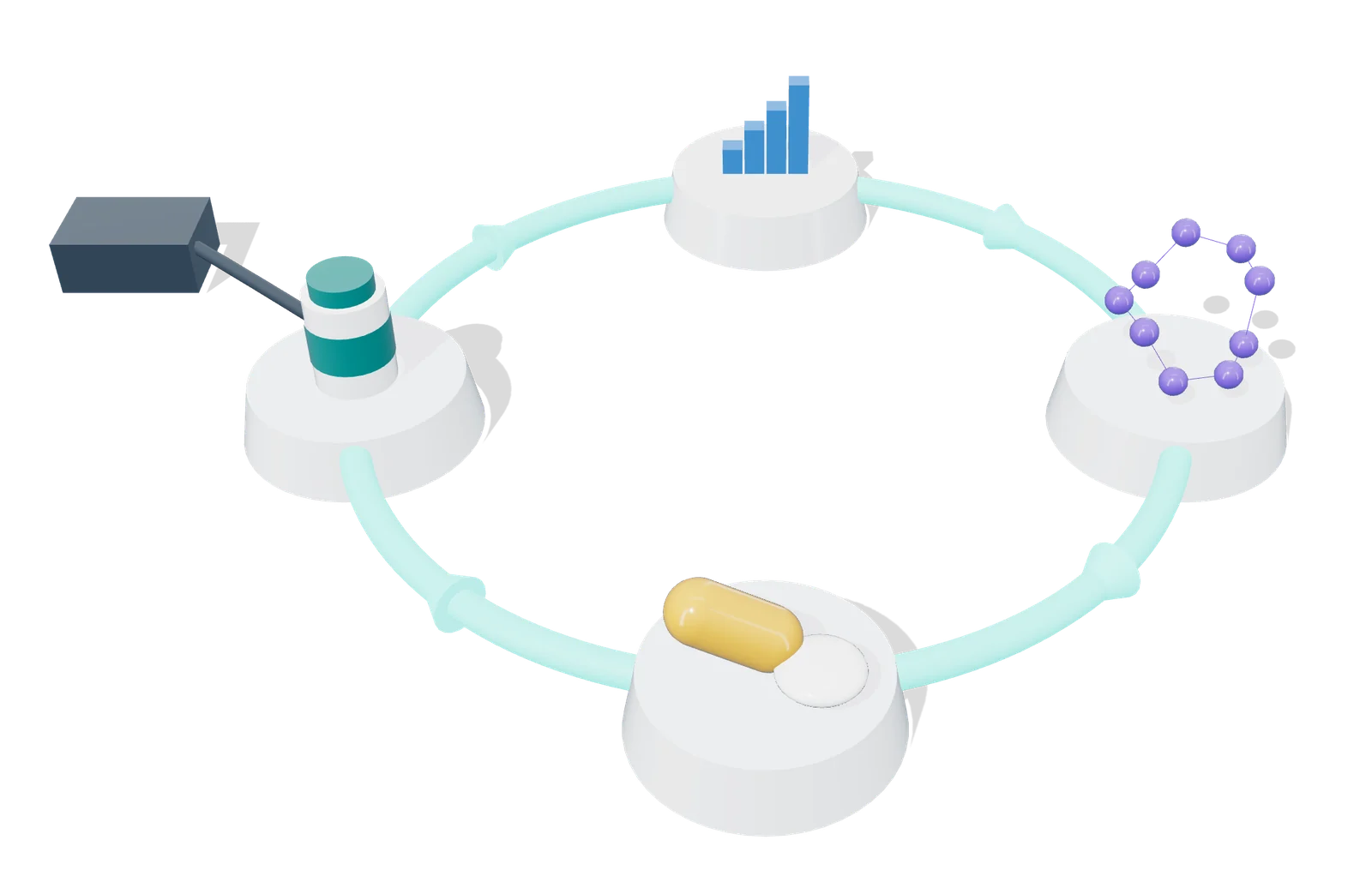
12345
1 Models and data
2 Ingredients designed in final format
3 Owned products and licenses
4 Market, lot and outcome data
5 Development and testing services: early revenue and data
The proposed business model, rendered by EUTECNIQ. No product, license or revenue exists yet.
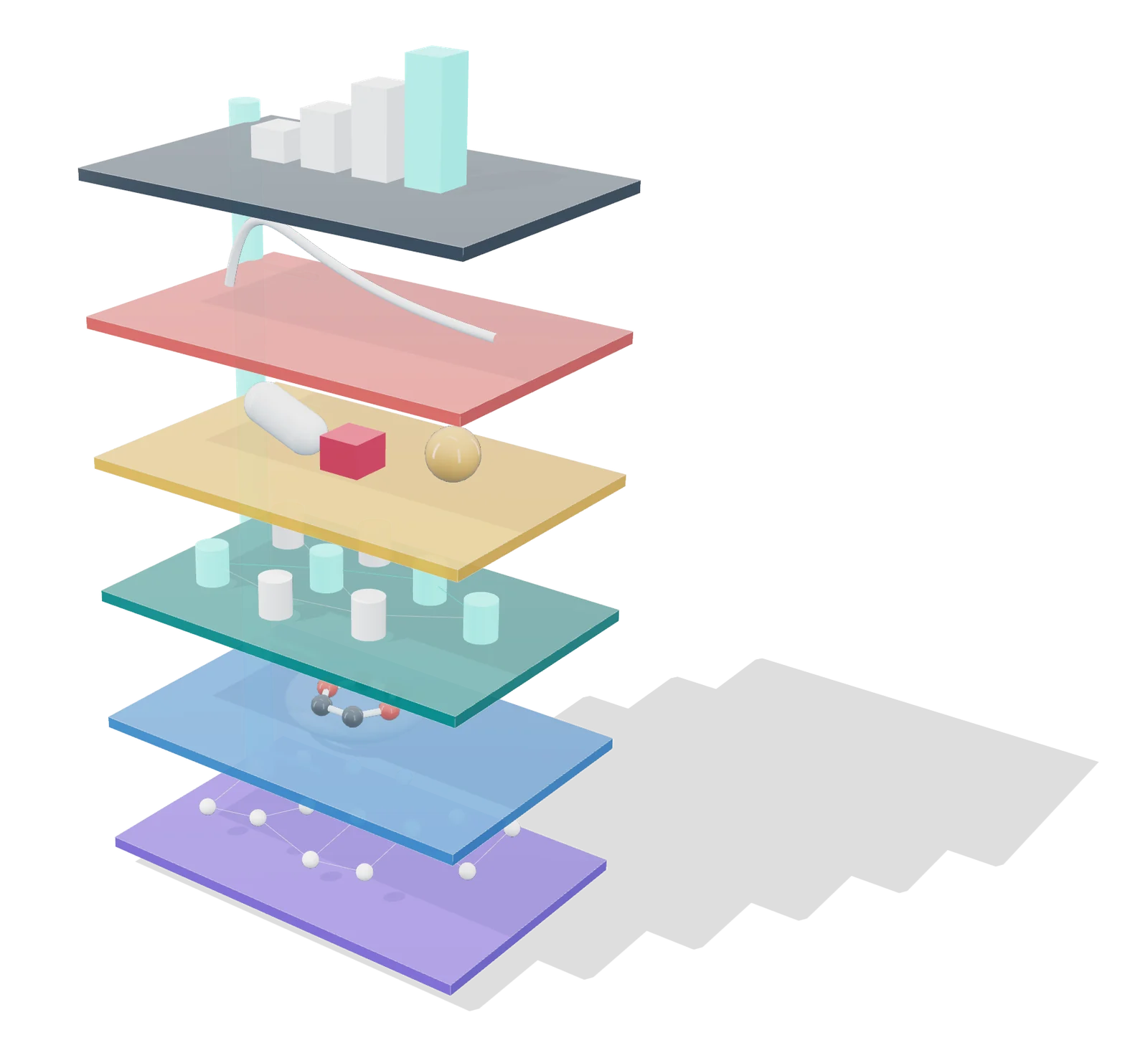
123456One data record runs through every layer
1 Discover: Large botanical data model: plants, compounds, targets
4 Formulate: Final-format design: delivery system and dosage form together
5 Exposure: PBPK/PD with Bayesian calibration
6 Market: Owned ingredients, own products, licenses
The proposed model chain, rendered by EUTECNIQ. The computed studies on this site cover parts of layers 2 to 5; no model has been trained on EUTECNIQ data, which do not yet exist.
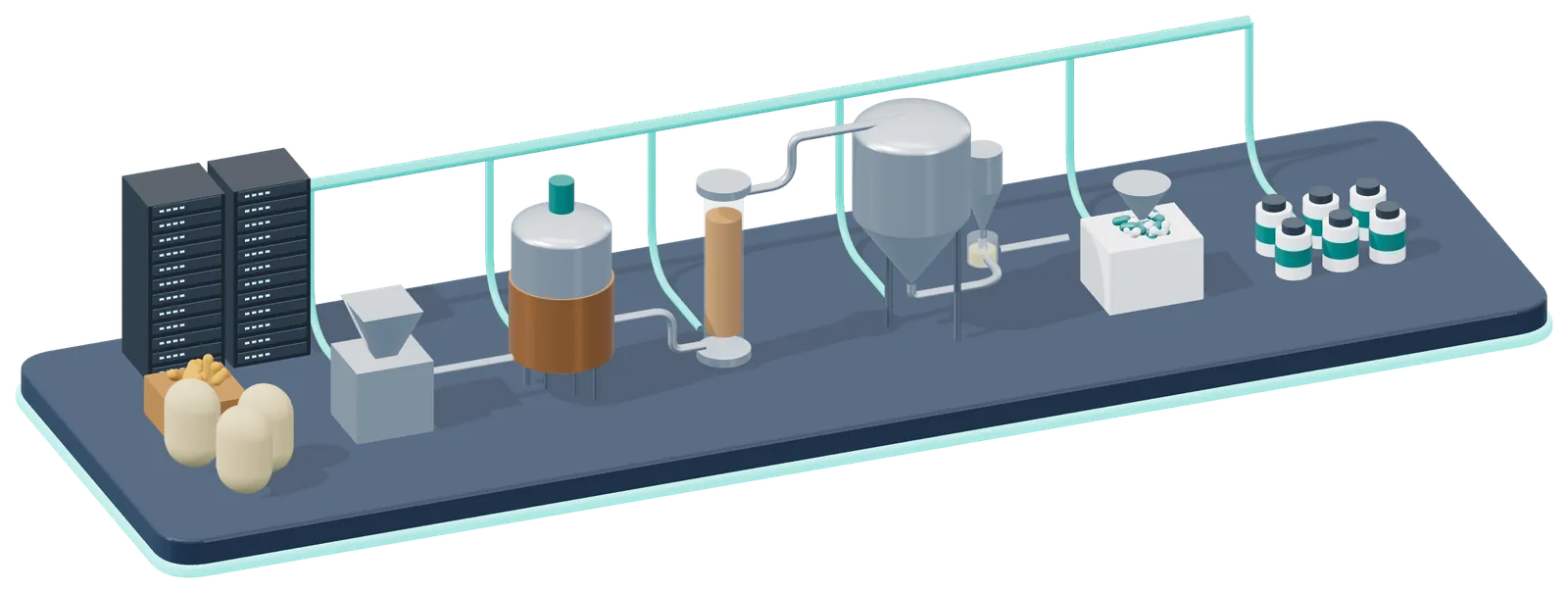
12345678
1 Authenticated plant material
2 Mill: particle size set by the model
3 Extraction: route and conditions chosen by optimization
4 Purification and standardization
5 Drying into the final-format particle
6 Final dosage form
7 Finished product
8 Model and data server: one record and one model chain for every station
The proposed integrated line, rendered by EUTECNIQ from generic equipment types; schematic, not to scale. EUTECNIQ has no facility or equipment yet.
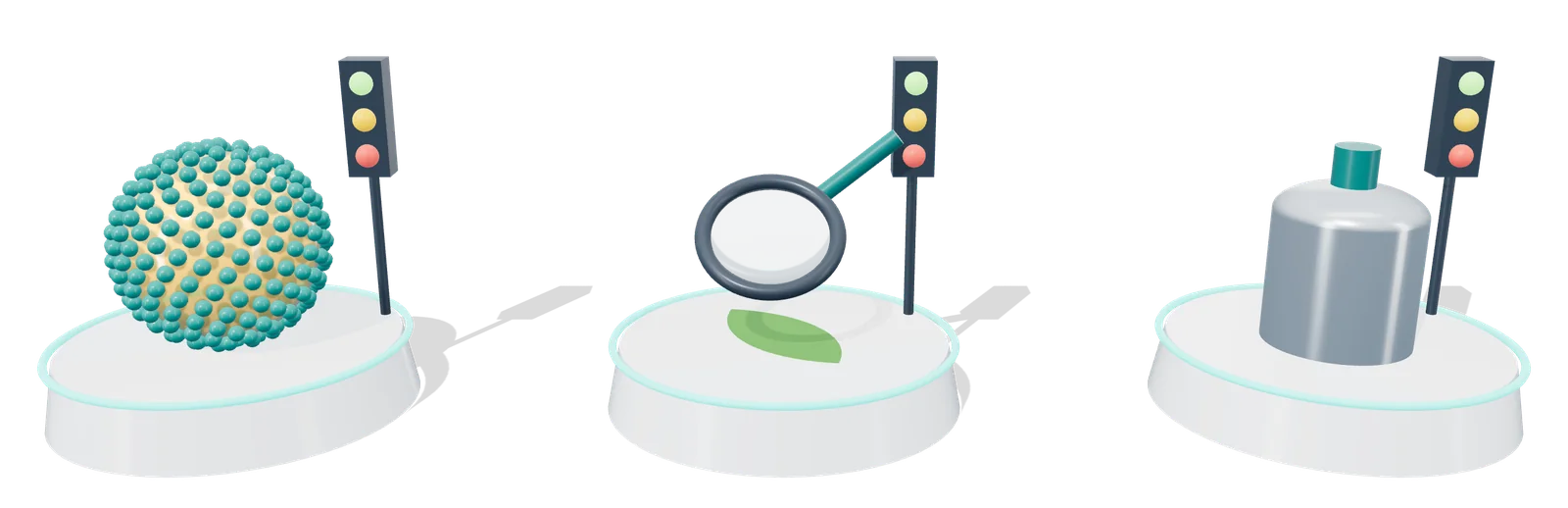
1234
1 Ingredient feasibility and delivery selection
2 Supplier qualification and comparability
3 Process optimization and technology transfer
4 Each ends in a written decision: go, change or stop
The three proposed service packages, rendered by EUTECNIQ. None is available yet.
SchematicThe five jobs, drawn by EUTECNIQ. All are proposals; no laboratory is operating.
Difficult botanicals fail in six documented ways, from rejected lots to processes that change at scale. The company named on the label or specification carries the cost.
Three fixed-scope packages: ingredient feasibility and delivery selection, supplier qualification and comparability, and process optimization and technology transfer. Each ends in a written go, change or stop recommendation.
Integration alone would not set the company apart. The case rests on the fit between these failure modes and work the founder reports having led at prior employers.
Paid problem, then verified solution, repeatable method and, where the contract allows, knowledge the company controls; later revenue comes from licensing, repeat work and owned ingredients. Client data stay with the client.
A proposed flagship case, with no program started: a turmeric extract with natural origin verified on every lot and a delivery form backed by its own exposure and safety data, earning per kilogram supplied or per license. It differs from a testing laboratory because the specification, process and dossier would stay with the company.
In stages: data, models, partner-run validation and paying customers first; a focused laboratory only after repeat paid work and validated technical milestones; pilot process only after Gate 1. The plan includes no day-one plant, and letters of intent would not release any laboratory spending.
Package B, supplier qualification and comparability: whether clients pay for a faster, better-founded accept-or-reject decision on a botanical source than they reach today.
EUTECNIQ Atlas, the free public guide, is run as a separate program with its own customers, costs and milestones. Paid membership is a hypothesis; the ingredient thesis does not depend on it.
Commercial: that buyers will not pay for programs. Nine further risks are listed with their first warning sign and the planned response.
Proposed capability Every line is a proposal by a company in formation. The ten parts below give the evidence, sources and limits for each; sourced market and regulatory data are in the appendix.
The first test
The first market test is narrow: will clients pay for a better-founded decision on a botanical source?
Of the three entry packages, supplier qualification and comparability (Package B) would be tested first. It answers the problem with the clearest published signal, needs the least equipment, and produces a result a client can check within weeks rather than years.
Why this problem first
Specifications and the tests that verify them drew 711 of FDA’s 1,938 inspection citations under the supplement manufacturing rule in FY2025 (446 under 21 CFR 111.70 and 265 under 111.75). Citations of the dietary-ingredient identity test numbered 22 in FY2022, 15 in FY2023, 39 in FY2024 and 66 in FY2025 (Part 1). Counts are citations, not rates.
A manufacturer may rely on a supplier’s certificate only after confirming its results (21 CFR 111.75(a)(2)(ii)), so every new or alternate source creates confirmation work.
Adulteration is documented for widely traded botanicals: 20.0% of 2,235 turmeric samples in 48 published surveys, pooled rather than market-wide (curcumin demonstration).
It can start at Stage 0 and Stage 1: identity by HPTLC, HPLC with diode-array detection and microscopy in house, contaminant panels at accredited partners (Part 7).
How it would be measured
Demand. Deposit-paid statements of work for Package B by the day-90 and day-180 checkpoints; letters of intent do not count (Part 8).
Speed. Days from sample receipt to a written qualification decision, against the client’s own current time recorded at intake.
Accuracy. Discrepancies found between supplier certificates and independent results, and the share of qualified sources whose later lots pass the client’s incoming tests.
Repeat. Clients who return for requalification, another source or another ingredient.
Economics. Margin per package after partner-laboratory costs, recorded from the first delivery.
Each threshold will be set in writing before day 0, and results will be reported against it; the thresholds are not published here.
What would disprove it
Any of three results would disprove it: clients will not pay a price that covers partner-laboratory costs, decisions arrive no faster than through the laboratories clients already use, or independent results rarely differ from supplier certificates, leaving little for the client to buy.
Why it could grow beyond a testing service
Where contracts allow, the method and decision rules built for one botanical can be reused on the next client’s source of the same botanical, so later programs should cost less to deliver than the first. Whether that happens is itself measured at the day-365 checkpoint: at least one reusable method the company may keep (Part 5).
Proposed capability The service is a plan. Inspection counts and adulteration data are published evidence, cited in Part 1 and on the curcumin demonstration.
01 · The commercial problem
Difficult botanicals fail in six documented ways, and each failure has an owner
The cost falls on the company whose name is on the label or the specification: a lot it must reject, a product that behaves differently from batch to batch, a filing it must strengthen, a process that changes at scale. FDA inspection data and the published literature document each one.
FDA inspection citations under the dietary supplement manufacturing rule reached 1,938 in FY2025, the most in any year from FY2014 and about 5% above FY2017; part of the rise since FY2021 reflects resumed inspections. FDA Form 483 citations under 21 CFR Part 111, by fiscal year (count)
Published evidence U.S. FDA, Inspection Observations spreadsheets, fiscal years 2022 to 2025, Foods tab; citations counted in October 2026. Counts are citations, not rates: the number of inspections differs from year to year. Section 111.70 sets specifications; section 111.75 covers the tests that verify them.Show the data (4 years)
FDA Form 483 citations under 21 CFR Part 111
Fiscal year
All Part 111
§ 111.70
§ 111.75
of which § 111.75(a)(1)(i) identity test
FY2022
1,218
271
129
22
FY2023
1,173
247
104
15
FY2024
1,583
366
173
39
FY2025
1,938
446
265
66
Six failure modes, the cost to the owner and the public record
Failure mode
What it costs the owner
Documented signal
Rejected lots
A component that fails its identity specification must be rejected and may not be used (21 CFR 111.77(b)). The lot, the production slot and sometimes the supplier are lost.
Citations of the identity-test requirement, § 111.75(a)(1)(i), numbered 22 in FY2022, 15 in FY2023, 39 in FY2024 and 66 in FY2025. A 2026 conference abstract summarizing fifteen years of the Botanical Adulterants Prevention Program reports that adulteration of botanical ingredients has persisted.
Inconsistent performance
Products sold under one botanical name can differ in composition, so a result from one product does not carry over to another.
A Cochrane review of 29 St. John’s wort trials (5,489 patients) found that products on the market “vary to a great extent” and limited its conclusions to the extracts tested. FDA reviewers attribute the low yield of botanical drug applications partly to batch consistency.
Unsuitable formulations
A poorly absorbed or unstable ingredient can deliver far less to the body than its label amount suggests, and the formulation choice sets how much.
After 2 g of unformulated curcumin, serum levels in volunteers were undetectable or very low. Formulations of the same compound differed about 27-fold in exposure (Part 2).
Regulatory rework
When FDA objects to a new dietary ingredient notification, the company must strengthen its identity or safety information before it relies on the ingredient.
From 1995 to 2020, 36.5% of FDA’s 1,078 substantive responses were acknowledgments without objection; the share was 71% in FY2022 and 61% in FY2023. FDA finalized guidance on NDI identity and safety information on October 19, 2026.
Inadequate evidence
Claims and dose decisions rest on studies that did not account for what the product actually delivered.
Of 171 systematic reviews of oral curcumin (2003–2022), only 3.5% reported subgroup or sensitivity analyses for bioavailability in their methods.
Scale-up failure
A process that works at bench or pilot scale changes at production scale, and the difference often appears only in production batches.
In a published spray-drying scale-up, matching droplet size between a pilot and a production dryer still required production trials, because mixing and residence time differed.
Sources: 21 CFR 111.70, 111.75 and 111.77 (eCFR, read November 1, 2026); FDA Inspection Observations FY2022–FY2025; Gafner et al., ICSB 2026 abstract; Linde et al., Cochrane 2008; Park et al., Ther Innov Regul Sci 2025; Shoba et al., Planta Med 1998; Natural Products Insider (Dec 18, 2020) and SupplySide Supplement Journal (Nov 8, 2022; Dec 12, 2023), reporting FDA data; 91 FR 66336; Bučević Popović et al., Pharmaceuticals 2024; FDA CDER, “What is a Botanical Drug?”; Thybo et al., Pharm Res 2008. An acknowledgment without objection is not an FDA approval. Full list in references.
Each failure falls to a specific function: quality, product development or regulatory affairs. That function is the buyer EUTECNIQ would approach first.
The first customer is a U.S. brand or ingredient supplier with one difficult botanical
EUTECNIQ would start narrow, with U.S. dietary supplement brands, ingredient suppliers and importers that hold a specific botanical they cannot yet formulate, qualify or scale with confidence. Wider markets would wait until this group has paid for defined programs.
In the first wedge
Brands launching or reformulating a product around a poorly soluble, unstable or variable botanical.
Ingredient suppliers that must show a new extract, process or source is comparable to the old one.
Importers that must verify foreign suppliers under the Foreign Supplier Verification Program rule for dietary supplements (21 CFR 1.511).
Later, or with partners
Drug sponsors. Work under GLP, GCP or drug manufacturing rules would go to qualified partners.
Food, beverage and cosmetic companies, once the supplement packages are repeatable.
Buyers of single tests at the lowest price per test. Large testing laboratories already serve them.
Why a buyer would pay for a program instead of a test
Routine testing tells a company whether a lot meets its specification. A program would answer the questions that come before and after that result, and end in a decision the client can act on: go, change or stop.
Question
Routine testing
Integrated program Proposed
Does this lot meet its specification?
Yes or no, lot by lot.
Also whether the specification fits the ingredient, the product and its intended use (21 CFR 111.70(b)).
Which supplier or source?
Tests the samples it is sent.
Compares candidate sources against comparability criteria fixed before testing.
Which delivery format?
Outside its scope.
Screens formats against a target and stops weak options early, with reasons.
Will it hold at scale?
Outside its scope.
Finds the scale-dependent parameters and writes the transfer package for the receiving site.
The same compound in ten formulations reached 6.9 to 185 times the exposure of unformulated curcumin Dose-normalized relative oral bioavailability, healthy volunteers (×, log scale)
Published evidence UK Committee on Toxicity, TOX/2025/09, case study 2, Table 5 (March 19, 2025), reproducing Jamwal 2018; Antony 2008 value per the 2019 corrigendum. Studies used different doses, analytes and designs, so values are not head-to-head. Higher plasma exposure is not evidence of a health effect. More on bioavailability by design.Show the data (10 formulations)
Dose-normalized relative oral bioavailability against unformulated curcumin
Study
Relative bioavailability (×)
Schiborr 2014, micellar
185
Jäger 2014
136.3
Gota 2010
100
Purpura 2018
85
Cuomo 2011
48
Sasaki 2011
15.9
Im 2012
15.8
Madhavi and Kagan 2014
9.7
Schiborr 2014, micronized
9
Antony 2008
6.9
A formulation choice spans more than an order of magnitude in exposure, and most reviews did not account for it. That decision, made early and documented, is what a buyer would pay a program for.
HypothesisThis customer definition is untested. No customer has signed; the day-90 milestone in Part 8 tests it.
Three bounded packages, each ending in a decision the client can act on
Each package has a fixed scope, written outputs and acceptance criteria agreed in the statement of work before work starts. Each also states what it would not establish. No prices are published; a package would be quoted after a technical review of the client’s material.
A
Ingredient feasibility and delivery selection
For a brand or supplier with one botanical and one intended product format.
Scope
Identity and composition baseline by independent methods; solubility, dispersibility and stability screening; a short list of delivery approaches, such as an emulsion, a spray-dried dispersion, encapsulation or complexation, tested in a designed experiment; in vitro bioaccessibility where relevant.
Outputs
Feasibility report with a go, change or stop recommendation for each approach; lead prototype; early stability data; draft specification; a list of regulatory-category questions for the client’s counsel.
Acceptance criteria
The lead prototype meets the agreed target attributes at the agreed stability pulls. Marker methods are shown fit for purpose. Every rejected approach has a documented reason.
Does not establish
Systemic bioavailability, a validated shelf life or any health effect.
B
Supplier qualification and comparability
For a supplier, brand or importer adding or replacing a source.
Scope
One ingredient; up to three candidate suppliers, or an incumbent against an alternate; specification review against 21 CFR 111.70(b); identity by HPTLC (USP <203>), microscopy and a chromatographic fingerprint; contaminant panels for the destination market at accredited partners; lot-to-lot comparison.
Outputs
A qualification report for each supplier, a comparability statement, a recommended specification and test plan, a requalification schedule, and records that support an importer’s supplier verification.
Acceptance criteria
Comparability criteria and the number of lots fixed before testing; supplier certificate results confirmed within stated method uncertainty, the confirmation 21 CFR 111.75(a)(2)(ii) requires before a certificate can be relied on.
Does not establish
That future lots will conform, or that a regulator will accept the source.
C
Process optimization and technology transfer
For a client moving an extraction, drying, emulsification or blending step to scale or to another manufacturer.
Scope
Process map with a closed mass balance; critical parameters found by designed experiments; scale-dependent parameters identified; transfer protocol agreed with the receiving site; confirmation runs performed by that site.
Outputs
A process description and control strategy, inputs to the receiving site’s master manufacturing record (21 CFR 111.205), and a transfer report.
Acceptance criteria
Receiving-site batches meet the agreed specification for the agreed number of consecutive batches. The mass balance closes within the agreed tolerance. Deviations are investigated and documented.
Does not establish
Drug process validation. FDA’s process validation guidance does not cover dietary supplements.
Each package draws on the proposed services catalog on services and the written outputs on scientific deliverables. Standards named: 21 CFR 111.70, 111.75, 111.205; USP <203>; FDA, Process Validation: General Principles and Practices (2011), scope as summarized on scale-up and technology transfer.
Proposed capabilityNone of these packages is offered today.
Each failure mode maps to work the founder reports having led
Ingredient companies already combine sourcing, testing and manufacture, so integration alone would not set EUTECNIQ apart. The case rests on fit between the problem and the founder’s experience. The roles below are founder-reported and took place at prior employers; they are not EUTECNIQ results.
Problem
Founder-reported experience, 2007 to present Founder-reported
Rejected lots and supplier qualification
Ran cGMP and quality-system work aligned with 21 CFR Part 111: specifications, certificate-of-analysis review, supplier qualification, out-of-specification and out-of-trend investigations, corrective and preventive action, change control. Designed, equipped and qualified an in-house laboratory for analytical development, stability, microbiology, raw-material qualification and product release.
Unsuitable formulations
Directed formulation of botanical actives in liquid, emulsion, suspension and powder formats, covering solubility, dispersion, bioavailability, preservative systems and stability, with quality by design and designed experiments.
Inadequate evidence
Human pharmacokinetic and pharmacodynamic studies informed product and dose decisions.
Scale-up failure
Led end-to-end technology transfers into manufacturing. In process engineering and manufacturing science across a multi-site cGMP network producing active pharmaceutical ingredients: process validation, technology transfer from laboratory to commercial scale, and support of FDA inspections.
Building the organization
Built and led a research and quality-control group, led engineering and operations teams, and managed multi-million-dollar capital and OPEX projects, including cGMP expansions.
Extraction and computation
Industrial process design, debottlenecking, extraction and separation, and energy optimization with process simulation and techno-economic evaluation. In advanced materials: laboratory proof of concept to pilot scale, molecular modeling (COSMO-RS), designed experiments, multivariate statistics and machine-learning screening.
Public record
Ph.D., University of Colorado Denver (2015); 13 peer-reviewed publications, 2010–2016; six granted patents from three invention families naming him as co-inventor, in the United States, Japan and Europe. Details and sources are on the founder page.
What this does not show
The results belonged to prior employers. EUTECNIQ has no team yet, so one founder is a key-person risk. Running programs inside a company is a different skill from selling them to new clients; the day-90 milestone tests that.
Value would accumulate only where paid work leaves a method the company may keep
A paid program solves the client’s problem first. If the contract allows it, the work can also leave behind a verified approach, then a repeatable method, then knowledge the company controls. Client data stay with the client and are not a company asset.
Five steps from a paid problem to later revenue, with one contract condition Proposed mechanism; the dashed box is what the client keeps
Educational schematic Management proposal. EUTECNIQ owns no method, patent or know-how today.Text version of the five steps
A paid client problem. Package A, B or C, with a fixed scope.
A verified process or formulation. It meets criteria agreed before work started. The client’s data, formulation and results are delivered to the client.
A repeatable method. Validated and reusable on the next program.
Protectable or contractually controlled knowledge. A patent, trade secret or contract right; this step needs ownership terms fixed in the contract before work starts.
Licensing, repeat work and owned ingredients. The later revenue forms in Part 6.
Could become a company asset, if the contract allows
Methods and know-how developed at EUTECNIQ’s own cost.
Method validations and decision rules that are not specific to one client’s product.
Improvements to EUTECNIQ’s own processes, where the contract assigns or licenses them.
Processes and ingredients EUTECNIQ develops on its own account.
Belongs to the client
The client’s data, results and reports.
The client’s formulations and specifications.
Inventions on the client’s product, as the contract assigns them.
Any confidential information the client provides.
A natural product isolated from nature is not patent-eligible as such; compositions, processes, formulations and methods of use can be. Supplements receive no regulatory data exclusivity, so trade secrets and contracts must do much of what exclusivity and patents do for drugs.
Association for Molecular Pathology v. Myriad Genetics, 569 U.S. 576 (2013); Mayo v. Prometheus, 566 U.S. 66 (2012); 21 CFR 314.108 (exclusivity for approved drugs). Not legal advice. Limits: a competitor can develop similar methods independently, patents may not issue, and clients may refuse terms that let EUTECNIQ reuse know-how.
From the first paid problem to measurable company value
FeeInitial paying problem. A fixed-scope package, starting with Package B.
FeeValidated solution and contracted revenue. Accepted deliverables, invoiced and paid.
Know-howRepeatable methods and verified knowledge. Methods and decision rules reused on the next program, where contracts allow.
Owned assetA proprietary ingredient or delivery platform. Only where ownership is established: work funded on EUTECNIQ’s own account, or rights assigned in contract.
RecurringLicensing, recurring supply, partnerships and selected spin-offs. Revenue that does not need a new statement of work each time.
MeasuredMeasurable company value. Tracked as the share of revenue from supply and licenses rather than fees, repeat-client share, gross margin by revenue form, and the number of owned methods, specifications and filings reviewed by counsel.
ProposalProposed flagship case · not a program
What the company could own: a turmeric extract with verified natural origin and measured exposure
Package B tests whether clients pay for a better-founded decision on a source. The flagship case shows the larger business that test could lead to: an ingredient EUTECNIQ specifies, documents and owns, earning on every kilogram supplied rather than on every project. It builds on the public data of Demonstration 4. No such program, customer, data, patent or revenue exists, and nothing here is a forecast.
1 · Technical difference
Three properties a buyer can check on every lot
Natural origin verified per lot by hydrogen isotope ratio. In one published set, curcuminoid content by HPLC could not separate 6 synthetic samples from 21 natural ones; the isotope ratio separated all of them (Perini et al. 2023).
Composition and contaminants specified: the three curcuminoids by a validated HPLC method (AOAC 2016.16), with proposed limits of 2 mg/kg lead and 30 mg/kg residual acetone.
A delivery form with its own exposure and safety data. The UK Committee on Toxicity has opened the question of formulations designed to raise curcuminoid bioavailability (COT 2025); a form that answers it with its own data is the difference.
2 · What must be validated first
Six results, each a stop point
The identity, assay and contaminant methods work on real commercial lots.
Pilot lots stay within the specification lot to lot.
Stability of the curcuminoids in the finished form.
A human pharmacokinetic study of the form against a standard extract.
A safety and exposure assessment for the intended intake, with partner GLP studies where needed.
New-dietary-ingredient status and freedom to operate, reviewed by counsel.
3 · What could be protected
Process, formulation and know-how; never the molecule
Possibly patentable: a process, formulation or composition, if it proves new and non-obvious. Patents may not issue.
Trade secrets and contracts: process parameters, the specification and the supplier files.
Not protectable: curcumin itself; a naturally occurring compound is not patent-eligible merely because it has been isolated (Myriad, 2013). Supplements receive none of the regulatory data exclusivity that approved drugs receive (21 CFR 314.108).
4 · Who pays, and why
Brands that must verify the identity of every dietary ingredient
Demand exists in measured retail data. In 2024, turmeric supplements, including standardized extracts, sold $141.8 million in the U.S. mainstream multi-outlet channel (fourth among herbal supplements) and $37.1 million in the SPINS natural expanded channel, where turmeric ranked first for the third consecutive year (SPINS data in the ABC Herb Market Report). These two scanned channels exclude direct-to-consumer sales.
The obligation is the buyer’s. A supplement manufacturer must test or examine every dietary-ingredient component to verify its identity (21 CFR 111.75(a)(1)(i)), and turmeric adulteration is documented: 20.0% of 2,235 samples in pooled published surveys (Gafner et al. 2026).
Assumption to test Brand owners would pay a premium per kilogram for an extract that arrives with its origin, composition and exposure already documented.
5 · Manufacturing economics
Mass balance known from the literature; costs not yet measured
At published laboratory yields, 1 metric ton of milled rhizome gives about 214 kg of acetone oleoresin carrying about 77 kg of curcuminoids (Barriga-Sánchez et al. 2024; arithmetic on three extractions). Plant yields must be measured.
Made at first by qualified cGMP contract manufacturers, so the case needs no plant of its own.
Cost per kilogram would sum rhizome, solvent recovery, energy, contract manufacturing and the per-lot tests: isotope ratio, HPLC, ICP-MS and residual solvent. None is priced here; the private model carries them.
Gate Contribution per kilogram must clear a floor set before scale-up.
6 · Recurring revenue
Paid per kilogram or per license, without a new statement of work
Supply: repeat orders under a supply agreement with the specification as its exhibit.
License: the process and specification licensed to an ingredient manufacturer, for royalties.
Either form earns when the customer reorders, which a project fee does not. No price, volume or margin is stated, because none has been tested with a customer.
Why this would differ from a contract testing laboratory
A fee-for-service testing model compared with the proposed ingredient-owning model
Aspect
Fee-for-service testing
Proposed ingredient owner
What is sold
A result for each sample submitted
A specified ingredient per kilogram, or a license to make it
Revenue repeats when
The client sends the next sample
The customer reorders under a supply or license agreement
What stays with the company
Little: data and results belong to the client
The specification, process know-how, the safety and exposure file, and any patent that issues
What the methods are for
The product sold
The quality system behind the product, also sold as Package B
Main risk
Price competition per test
Development, safety, demand and freedom-to-operate risk, gated before each commitment
How it would start. Only if repeat Package B work shows buyers struggling to source turmeric extract they can authenticate, and only through its own gate: funded separately from client work, with counsel’s review of ownership and no use of any client’s confidential data. Package B and the checkpoints of Part 8 come first.
Perini M, et al. Antioxidants 2023;12:498; Mudge EM, Brown PN. J AOAC Int 2018;101:203–207; UK COT TOX/2025/09; Smith T, Lang C, Craft E. HerbalGram 2025;(144):46–69, Tables 4 and 5 (SPINS, 52 weeks to December 31, 2024); 21 CFR 111.75(a)(1)(i); Gafner S, et al. Pharm Biol 2026;64(1):87–107; Barriga-Sánchez M, et al. Food Sci Technol (Campinas) 2024;44:e00168; Association for Molecular Pathology v. Myriad Genetics, 569 U.S. 576 (2013); 21 CFR 314.108. Not legal advice.
Five ways to be paid, each tied to a deliverable the client can check
Fees for defined work would come first. Supply margins and licenses would follow only after the company owns something worth supplying or licensing. Drug candidates would pass to partners through separate gates and are not part of operating plans.
Revenue form
Who pays
For what
When it could arise
Assumption to test
Project fees
Brands, ingredient suppliers, importers
Packages A, B and C at fixed scope
From the first package
Buyers pay for a defined program rather than per test
Development fees
Clients with a multi-stage ingredient or product program
Staged work beyond one package, billed by stage
After repeat demand
Clients commit to stages tied to go or stop criteria
Transfer milestones
The client or the receiving manufacturer
Acceptance of a transfer at the receiving site
After Package C deliveries
Receiving sites accept payment on acceptance
Supply margins
Brands and manufacturers
An ingredient EUTECNIQ owns or controls, made at first by qualified cGMP contract manufacturers
After an owned ingredient passes its gates
An owned ingredient finds paying demand
Licenses and royalties
Ingredient companies and manufacturers
Rights to EUTECNIQ-owned processes, methods or ingredients
After protectable or contractually controlled knowledge exists
Licensees value the know-how enough to pay for it
Management assumptionNo prices, volumes, revenue or margins are stated, because none has been tested with a customer. Each assumption has a milestone in Part 8.
The first contract: how a Package B program would be priced and paid
Scope
One ingredient; up to three candidate suppliers, or an incumbent against an alternate; tests, lots and comparability criteria fixed in the statement of work before testing (Part 3).
Price
A fixed price per package, quoted after a technical review of the client’s material. No price list is published.
Payment
A deposit on signing and the balance on acceptance of the qualification report against the agreed criteria.
Data and rights
The client owns its data, results and reports. EUTECNIQ keeps only method know-how that is not specific to the client’s product, and only where the contract says so (Part 5).
Terms
Confidentiality, liability and change control as reviewed by counsel before the first signature.
Unit economics per package
Contribution = price − partner-laboratory cost − consumables − delivery time × loaded cost per analyst-day
A quote is accepted only if its contribution clears the floor set before day 0. Project revenue for a period is the sum over package types of packages delivered × price.
Management proposal Pricing assumptions, capacity, staffing, capital expenditure, working capital and runway are modeled in a private, bottom-up model for qualified investors under NDA. Request it.
Capital would be released in stages: data, models and partner validation first; a laboratory only after validated demand
A large facility on day one would commit capital before demand, methods or contracts exist. EUTECNIQ would instead start with data rights, scientific and modeling talent, software, partner-run validation and customer acquisition, add a focused laboratory only when paid demand and technical milestones justify it, and expand only when programs repeat. The longer-range facility plan would be reached only through its gates.
Stage
Starts when
Equipment priorities
Core hires
Placed with partners
Quality system
Stage 0 · Formation and partner network
Funding for Stage 0 is committed
None owned; cloud computing, scientific software, data licenses and reference materials
Founder; computational and data-science lead; head of quality, independent of commercial decisions
All testing at ISO/IEC 17025-accredited laboratories; toxicology at GLP laboratories; clinical studies at contract research organizations; any manufacturing at cGMP contract manufacturers
Quality manual, document control, partner and supplier qualification procedures
Stage 1 · Focused development laboratory
Repeat paid work and validated technical milestones, not before month 12
Identity and marker analysis (HPTLC, HPLC with diode-array detection, microscopy); formulation screening (laboratory homogenizer, particle-size analysis, laboratory spray dryer); ICH stability chambers; moisture and water activity; electronic notebook and LIMS
Director of analytical sciences; commercial and finance leads; formulation led by the founder at first
Elemental contaminants, pesticides, mycotoxins, microbiology and LC-MS/MS until volume justifies them in house
Method validation or verification on ICH Q2(R2) principles; equipment qualification; training records (21 CFR 111.12, 111.14)
Stage 2 · Laboratory core (Phase I of the facility plan)
The day-365 milestone is met
The partner tests programs use most, brought in house: LC-MS/MS, ICP-MS, GC-MS, a microbiology suite
Computational and data-science lead; scientists added by program load
Toxicology, clinical studies and manufacturing stay with partners
First ISO/IEC 17025 scope submitted for the tests offered
Stage 3 · Pilot process (Gate 1 of the facility plan)
Gate 1: financing, demand, permits and evidence
Pilot extraction, solvent recovery and pilot drying
Process and pilot staff
Commercial manufacturing stays with contract manufacturers
Manufacturing programs (21 CFR Parts 111 and 117) operating before any product is made
Make or buy, test by test
A test would move in house only when three things hold: programs use it often enough that partner turnaround delays client decisions, the method can be validated and run under the quality system, and the cost per program falls.
Working capital and contingency
Funds outside equipment would cover receivables on programs billed at milestones, partner prepayments, reference standards and consumables, plus a reserve for technical rework, schedule slippage and a failed method. The founder would size the reserve; no amount appears here.
ProposedNo site, lease, equipment order, quotation, partner agreement or hire exists. This plan excludes a day-one plant and any drug-development spending, which would be financed separately.
Four checkpoints in 18 months; no laboratory spending on interest alone
The clock would start when funded work begins. Each checkpoint has acceptance criteria fixed in writing beforehand, and every release of laboratory capital needs paid work and measured economics: deposit-paid statements of work, contribution margin after outsourced testing, projected utilization, a qualified pipeline and cash runway. Letters of intent do not count. Every threshold would be set before day 0, and results would be reported against it.
Spending steps up only after a checkpoint is met Proposed timing in months from the start of funded work
Proposed capability Management proposal. Stages are defined in Part 7. Timing is the earliest proposed and may slip.
Checkpoint
Acceptance criteria
If met
If missed
Day 90 · Paid demand
Discovery interviews completed with the predefined target list; signed statements of work with a paid deposit reaching the contracted value set before day 0 (letters of intent do not count); contribution margin per package, after partner-laboratory cost, consumables and delivery time, at or above the floor set before day 0; a qualified pipeline that projects the focused laboratory’s first-year utilization above its threshold; cash runway after the fit-out above its threshold; quality agreements with the partners for outsourced tests; quality manual and document control in use.
Begin the focused laboratory fit-out.
Stay partner-led, re-scope the customer wedge or the packages, and spend nothing on the laboratory.
Day 180 · First delivery
Paid packages delivered, accepted against their criteria and invoiced; first deliveries may run through qualified partner laboratories while the focused laboratory’s methods are validated or verified. Delivery cost and contribution margin recorded per package against the floor.
Sell further packages, and move testing into the laboratory as each method is shown fit for purpose.
Pause equipment purchases; deliver through partners while the cause is fixed.
Day 365 · Repeat and margin
The focused laboratory’s methods in scope validated or verified as fit for purpose. Paid packages of at least two types delivered; repeat or follow-on paid work from at least one client; contribution margin at or above the floor across delivered packages; the focused laboratory running near its planned maximum utilization, so that more space would be used; contracted backlog plus qualified pipeline projecting the laboratory core’s utilization above its threshold; cash runway covering the core’s build and ramp with a reserve; at least one reusable method EUTECNIQ may keep under its contracts; no critical finding in an internal quality audit.
Stay partner-led at the focused scale; do not expand.
Month 18 · Next decision
Contracted work covering a share of laboratory capacity set before day 0; at least one EUTECNIQ-owned process or formulation candidate with its ownership position reviewed by counsel; a written recommendation on Gate 1.
Prepare the Gate 1 case for the pilot process.
Remain a focused laboratory and service business, and report that plainly.
Ten risks, the first sign of each and the response planned in advance
The largest risk is commercial: that buyers will not pay for programs. The rest are technical, regulatory or structural. Each row names the response that would change the plan.
Risk
First sign
Mitigation
Response if it happens
Customer acquisition
Interest without a signed statement of work
Narrow wedge; fixed-scope packages; founder-led selling to quality, development and regulatory functions
Re-scope at day 90 before laboratory spending
Technical
No delivery approach or method meets the target for a material
Several approaches screened per package; go, change or stop criteria in every statement of work
Deliver the stop decision with its evidence; narrow the classes of material accepted
Safety
A safety signal in the literature or in partner data
Safety literature review at intake; GLP studies at partners where a dossier needs them; no dosing advice or health claims
Decline or stop the program. Herbal and dietary supplements were judged to cause 15.5% of liver-injury cases in one U.S. network, and EFSA could not identify a safe dose of green tea EGCG in supplements
Regulatory classification
An intended use that would make the product a drug
Category screened at intake and re-assessed whenever material, process, formulation or intended use changes; client filings reviewed by the client’s counsel
Move the program to a partner drug route or stop it. Intended use decides the category (21 U.S.C. 321(g)(1)). An article authorized for investigation as a new drug, with substantial clinical investigations instituted and made public, is excluded unless it was first marketed as a supplement or a food (21 U.S.C. 321(ff)(3)(B))
Scaling
A receiving site fails confirmation runs
Package C ends in receiving-site runs; pilot equipment waits for Gate 1
Do not open the pilot stage
Capital expenditure
Equipment idle or bought ahead of demand
Staged release; partners first; the make-or-buy rule in Part 7
Pause purchases at the next checkpoint
Sourcing
Adulterated or untraceable lots; protected species
Identity by independent methods; supplier qualification; more than one source per ingredient; CITES and access-and-benefit-sharing checks
Reject the source
Competition
Price competition on single tests
Sell decisions and packages; use large testing laboratories as partners
Stay out of commodity testing
Intellectual property
No ownable method after a year of programs
Ownership terms fixed before work starts; invention records; counsel review of any filing; confidentiality agreements with staff and partners
Operate as a service business and say so at month 18
Key person
Delivery depends on the founder alone
Early hires in quality and analytical sciences; written methods; advisory board
Slow sales until the team can deliver without the founder
Navarro et al., Hepatology 2014 (DILIN, 130 of 839 cases, 2004–2013; referral centers, not a national rate); EFSA ANS Panel, EFSA J 2018;16(4):5239; 21 U.S.C. 321 (Cornell LII). Competitors are described from their own documents on competitive landscape and how EUTECNIQ differs.
Company in formationInformation only. Not an offer to sell, or a solicitation of an offer to buy, any securities.
Also · A second program
EUTECNIQ Atlas is a separate program with its own customers, costs and proof; it shares the evidence base, not the business case
EUTECNIQ Atlas is a free public guide to botanical science. Nothing in the ten parts above depends on it. Whether it could become a paid membership is a hypothesis with its own milestones, judged on its own results.
Question
Ingredient development (Parts 1–10)
EUTECNIQ Atlas
Who would pay
Brands, ingredient suppliers and importers
Individual readers, if a membership is offered: consumers, students and practitioners
For what
Fixed-scope packages; later, supply and licenses
Tools and updates beyond the free guide; the free guide stays free
How buyers are reached
Direct technical selling and referrals
Search, education and returning readers
What drives cost
Partner laboratories, scientists, the quality system
Evidence review and editing, software, hosting, privacy and data governance
What retention means
Repeat and follow-on paid programs
Readers who return; renewals only if a membership exists
Main obligations
Client confidentiality, quality agreements, the rules for clients' products
Education without disease claims, editorial independence, consumer privacy
Status today
Proposed; no clients
Live and free; no accounts, prices, payments, subscribers or advertising
What the two would share, and what they would not
They would share the evidence base (graded findings, their sources and the verified effect sizes), the analytical and scientific knowledge behind it, and the design system. They would not share data: client data stay with clients, and Atlas holds none of them. Atlas saves a reader's items only on that reader's device.
Milestones that would show demand, in order
Readers return. Aggregate, privacy-preserving counts of returning readers, measured only after the privacy notice describes them, against a threshold fixed before measuring.
Readers use the tools. Use of the evidence landscape, the effect-size plots, the simulators and saved workspaces, by the same method.
Readers ask for more. Opt-in sign-ups for membership news, against a threshold fixed in advance.
Readers pay. A small priced pilot with refunds, before any account, sync or billing system is built.
HypothesisMembership is a concept with no price. Accounts, synchronization and payment would be built only after milestone 4. Whether Atlas stays an education channel, becomes a separately paid product or is set up as its own company would be decided only after the milestones. Its costs would be budgeted separately from the ingredient stages in Part 7.
For qualified investors
An introduction, then private materials under a nondisclosure agreement
Introduction. Use the investor form: your name, organization and type (fund, strategic, family office or individual) and what you would like to understand first.
A short call. To answer questions about this page. No offer of securities is made on this site or in that call.
Nondisclosure agreement. Before any confidential material is shared.
Private materials. The bottom-up unit-economics and runway model, the space and capacity case, and the founder’s role detail for diligence.
Gafner S, Upton R, Blumenthal M, Khan I. Fifteen years of the ABC-AHP-NCNPR Botanical Adulterants Prevention Program: what have we learned? ICSB, April 23, 2026. Abstract. egrove.olemiss.edu
Linde K, Berner MM, Kriston L. St John’s wort for major depression. Cochrane Database Syst Rev. 2008;(4):CD000448. doi.org
Park JK, Lee D, Rui L, et al. Analysis of regulatory botanical submission profile for cancer management from the U.S. FDA perspectives. Ther Innov Regul Sci. 2025;59(5):1129–1137. doi.org
U.S. FDA, CDER. What is a Botanical Drug? Content current as of September 3, 2026. fda.gov
Shoba G, Joy D, Joseph T, et al. Influence of piperine on the pharmacokinetics of curcumin in animals and human volunteers. Planta Med. 1998;64(4):353–356. doi.org
UK Committee on Toxicity. Novel formulations of supplement compounds designed to increase oral bioavailability, Annex A, case study 2: curcuminoids (TOX/2025/09), Table 5; updated March 19, 2025. cot.food.gov.uk
Jamwal R. Bioavailable curcumin formulations: a review of pharmacokinetic studies in healthy volunteers. J Integr Med. 2018;16(6):367–374; corrigendum 2019;17(4):310. doi.org
Bučević Popović V, Karahmet Farhat E, Banjari I, et al. Bioavailability of oral curcumin in systematic reviews: a methodological study. Pharmaceuticals. 2024;17(2):164. doi.org
Natural Products Insider. 26 years post-DSHEA, FDA still rejects most NDI notifications. December 18, 2020. supplysidesj.com
SupplySide Supplement Journal. Supplements sector achieves record-high rate of successful ingredient notifications. November 8, 2022. supplysidesj.com
SupplySide Supplement Journal. Most NDI notifications to FDA receive good day letter in FY23. December 12, 2023. supplysidesj.com
FDA. New Dietary Ingredient Notifications and Related Issues; Identity and Safety Information About the NDI; final guidance. 91 FR 66336, October 20, 2026. federalregister.gov
Thybo P, Hovgaard L, Lindeløv JS, Brask A, Andersen SK. Scaling up the spray drying process from pilot to production scale using an atomized droplet size criterion. Pharm Res. 2008;25(7):1610–1620. doi.org
Association for Molecular Pathology v. Myriad Genetics, Inc., 569 U.S. 576 (2013); Mayo Collaborative Services v. Prometheus Laboratories, Inc., 566 U.S. 66 (2012). law.cornell.edu
Smith T, Lang C, Craft E. Herb Market Report (Nutrition Business Journal and SPINS data). HerbalGram. 2025;(144):46–69; Tables 4 and 5. herbalgram.org
Perini M, Pianezze S, Ziller L, Larcher R, Pace R. Stable isotope ratio analysis for the authentication of natural antioxidant curcuminoids from Curcuma longa (turmeric). Antioxidants. 2023;12(2):498. doi.org
Gafner S, Orhan N, Kahraman Ç, Blumenthal M. A scoping review of turmeric adulteration based on data from six continents. Pharm Biol. 2026;64(1):87–107. doi.org
Barriga-Sánchez M, Sanchez-Gonzales G, Cueva-Martínez M, et al. Comparison of conventional and supercritical CO2 extraction techniques of Curcuma longa L. oleoresin and optimization of the spray drying process. Food Sci Technol (Campinas). 2024;44:e00168. doi.org
Mudge EM, Brown PN. Determination of curcuminoids in turmeric raw materials and dietary supplements by HPLC: single-laboratory validation, First Action 2016.16. J AOAC Int. 2018;101(1):203–207. doi.org
21 CFR 314.108, New drug product exclusivity. ecfr.gov
U.S. FDA. Guidance for Industry. Process Validation: General Principles and Practices. January 2011 (scope: drugs, biological products and APIs; dietary supplements not covered). fda.gov
21 U.S.C. 321 (definitions, including (g)(1) and (ff)). law.cornell.edu
Navarro VJ, Barnhart H, Bonkovsky HL, et al. Liver injury from herbals and dietary supplements in the U.S. Drug-Induced Liver Injury Network. Hepatology. 2014;60(4):1399–1408. doi.org
EFSA ANS Panel. Scientific opinion on the safety of green tea catechins. EFSA J. 2018;16(4):5239. doi.org
Health information notice.These statements have not been evaluated by the Food and Drug Administration. Nothing on this site is intended to diagnose, treat, cure or prevent any disease, and nothing here is medical advice.
Read the full notice
The information is for general education only. It does not replace advice, diagnosis or treatment from a qualified health professional, or any medication a clinician has prescribed. Do not start, stop or change any medicine, supplement or herbal product because of something you read here. Talk to your doctor or pharmacist first, especially if you are pregnant or breastfeeding, have a medical condition, take any medicines, are preparing for surgery, or are caring for a child. Research findings, traditional uses and safety data are reported as their sources state them; they are not recommendations or claims about any product. If you think you may have a medical emergency, call your doctor or 911 at once.
EUTECNIQ Sciences sells no supplements or health products today and receives nothing from any product or ingredient mentioned on this site; any commercial interest it later has in an ingredient will be stated on that ingredient’s page.
Ready to start a development project?
Tell us about an ingredient you want to specify, verify or license. Questions? Email [email protected]