

The data asset
Open databases catalog structures and the organisms they come from, but none of the five below is organized around an authenticated physical lot. EUTECNIQ proposes to build that record itself: one lot, measured end to end, kept as signed and tamper-evident data.
Status. EUTECNIQ is a company in formation (what exists today). It holds no dataset, model, ledger, laboratory or client data. Everything about EUTECNIQ on this page is a proposal.
Chandrasekhar et al., Nucleic Acids Res 2025;53(D1):D634–D643; Kim et al., Nucleic Acids Res 2025;53(D1):D1516–D1525; Rutz et al., eLife 2022;11:e70780; Public Law 119-37.
Related, not repeated here: Digital lab and traceability (Part 11, ALCOA+, lot genealogy, FSMA 204, a live hash-chain demonstration) · Large Botanical Model (architecture, open-data matrix, scaling) · Botanical Intelligence (the first narrow model) · Computational science and AI (provenance fields, data rights) · Model register
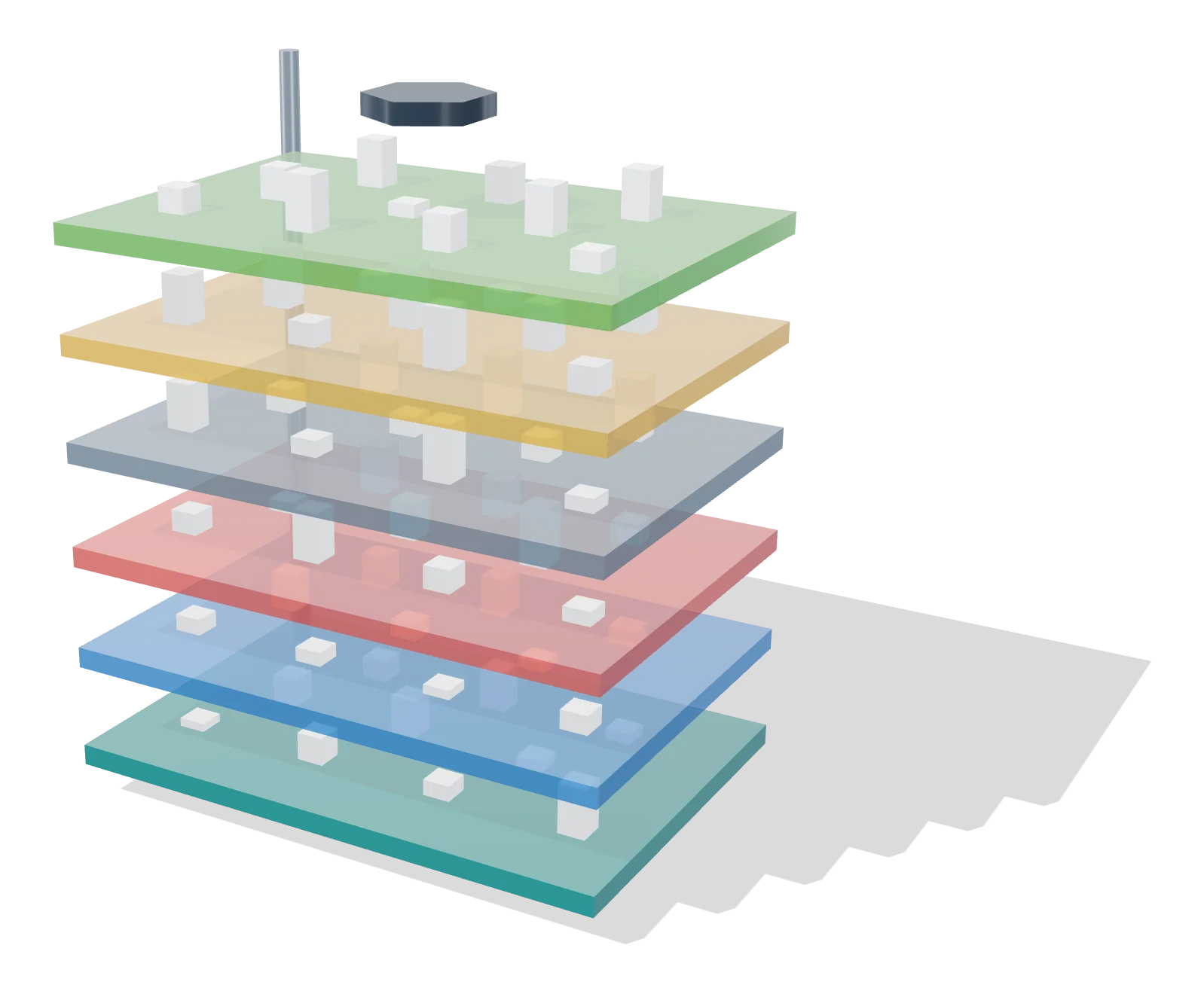
- 1 One authenticated lot
- 2 Six layers, measured the same way for every lot
The proposed lot record, rendered by EUTECNIQ. No lot data exist yet.
What public data hold
Open databases are large and useful for chemistry. Each is organized around a compound, a structure–organism pair or a food, and each states its own terms. COCONUT states three different licenses in three places.
None of the five below ties its values to a voucher-authenticated botanical lot carrying that lot's own fingerprint, contaminant results and bioassays. That pairing is what an identity or quality model needs, and it has to be measured.
| Database | One record is organized around | Size, as stated | Terms, as stated |
|---|---|---|---|
| PubChem (NCBI, NIH) | A compound or a deposited substance, with deposited bioactivity results | 119 million compounds, 322 million substances, 295 million bioactivities, more than 1,000 data sources (2025 update) | NCBI "places no restrictions on the use or distribution"; submitters may claim patent, copyright or other rights in submitted data |
| ChEMBL 36 (EMBL-EBI) | A compound, a target and a bioactivity value | 2.8 million distinct compounds; 17,803 drug targets (release of October 15, 2025) | Creative Commons Attribution-ShareAlike 3.0 Unported: credit required; adaptations distributed under the same license |
| LOTUS (hosted on Wikidata) | A structure, an organism and the reference reporting the pair | 750,000+ referenced structure–organism pairs | CC0 |
| COCONUT 2.0 | A natural-product structure, with organisms and references | 695,133 unique structures from 63 sources (September 2024 release) | Stated inconsistently: CC0 on the download page; each source's own license on GitHub; CC BY 4.0 on Zenodo |
| FoodData Central (USDA) | A food: Foundation Foods, SR Legacy, FNDDS survey foods, Experimental Foods and Branded Foods | Five data types; Branded Foods updated monthly, FNDDS every two years, SR Legacy final in 2018 | Public domain, CC0 1.0; USDA asks to be credited as the source |
Kim et al., PubChem 2025 update (abstract); NCBI Website and Data Usage Policies; EMBL-EBI, "ChEMBL 36 is live" (Oct 15, 2025) and ChEMBL home page; Rutz et al., eLife 2022; Chandrasekhar et al., NAR 2025 (COCONUT license statements per the v21 research pass); USDA FoodData Central home page; Creative Commons BY-SA 3.0 and CC0 1.0 deeds. All read October 28, 2026. Counts for these and other sources on a log scale: Computational science and AI. Summary, not legal advice.
One record per lot
EUTECNIQ proposes to measure each lot it handles the same way and to keep the results in one lot record. Identity, chemistry, contaminants, process history, stability and biology could then be compared across lots and botanicals. Part 111 already requires lot identifiers and genealogy links (21 CFR 111.155(d)(1), 111.260); the proposal would extend the same key to research data.
| Field | Unit or format | Method standard | Source instrument | Available |
|---|---|---|---|---|
| Lot ID and genealogy | Identifier; parent and child lot IDs | 21 CFR 111.155(d)(1); batch record, 111.260 | LIMS | Phase I |
| Voucher specimen | Herbarium accession number; images | USP <563> macroscopic and microscopic identification | Stereo and compound microscopes; herbarium (partner) | Phase I |
| DNA barcode | Sequence; marker region; reference library and version | USP <563> describes no DNA method; partner's validated method | Sequencer (partner laboratory) | Partner |
| HPTLC fingerprint | Plate images; RF of zones | USP <203> | HPTLC system | Phase I |
| LC-HRMS fingerprint | m/z, retention time (min), intensity; raw data file | Specificity per ICH Q2(R2), used as good practice | High-resolution LC-MS | Phase I |
| Quantitative markers | % w/w or mg/g | ICH Q2(R2) validation; compendial monograph where one exists | HPLC-UV; LC-MS/MS | Phase I |
| Elemental contaminants | µg/g; µg/day at the labeled dose | ICH Q3D(R2) permitted daily exposures | ICP-MS | Phase I |
| Pesticide residues | mg/kg | USP <561> Articles of Botanical Origin | GC-MS/MS; LC-MS/MS | Phase I |
| Microbial counts | cfu/g; specified organisms absent or present | USP <2023> | Incubators; plate counts | Phase I |
| Process parameters | °C, bar, min, solvent ratio, yield (%) | Batch production record, 21 CFR 111.260 | Process sensors; balances | Phase I (laboratory) Phase II (pilot) |
| Stability | % of initial assay at each pull point (months); storage condition | ICH Q1A(R2) storage conditions, used as good practice | Stability chambers | Phase I |
| In vitro results | IC50 (µM) or % of control, with positive and negative controls | Written protocol per assay | Plate readers; LC-MS | Partner |
| In vivo results | Dose (mg/kg bw/day); study endpoints | OECD test guidelines; GLP (21 CFR Part 58) as the study plan requires | Contract research laboratory | Partner |
| Human pharmacokinetics | Cmax (ng/mL), tmax (h), AUC (ng·h/mL) | Approved protocol, informed consent and IRB review (21 CFR Parts 50 and 56 where FDA rules apply) | LC-MS/MS bioanalysis | Only if studies are run |
| External record provenance | Source, identifier, version, retrieval date, license | Admission rule (next section) | Curator entry, second-person check | Phase I |
eCFR Title 21 Parts 11, 50, 56, 58 and 111 (current to Oct 21, 2026); USP <203>, <561>, <563> and <2023> (chapter titles and scope as published); ICH Q1A(R2) (Step 4, Feb 6, 2003), Q2(R2) (adopted Nov 1, 2023), Q3D(R2) (2022). ICH quality guidelines are written for drugs and are cited here as good practice. Phases follow Facilities and roadmap; DNA barcoding is assigned to a partner there.
Reputable sources only
External records would be admitted only from primary literature, regulators, compendia and maintained databases, and only after four checks. Each admitted record would carry its source, version, retrieval date and license, and would stay tagged as external so that it is never mistaken for a measurement on an EUTECNIQ lot. Nothing would be scraped from the web.
| Source class | Examples | Admitted as | Terms to check |
|---|---|---|---|
| Peer-reviewed literature | Journal articles with a DOI | Data values with the citation and table or figure number, entered by one curator and checked by a second | Values are cited; article text is not redistributed |
| Regulators | eCFR, FDA, EFSA, EMA | Rule text and limits with section number and retrieval date | Cited with the version in force on the retrieval date |
| Compendia | USP–NF, European Pharmacopoeia | Method and limit references by chapter or monograph | Subscription texts: cited, not copied |
| Maintained databases | PubChem, ChEMBL, LOTUS, COCONUT, FoodData Central | Records with database name, release and identifier | CC0: no permission needed. CC BY-SA: credit, and adaptations shared under the same license. Unclear terms: held out |
| Client data | Results on contracted samples | Only with written permission, segregated by contract | The contract governs every use |
| Excluded | Scraped web pages, marketing copy, unattributed tables, unlicensed content, retracted papers | Not admitted | — |
Creative Commons, CC0 1.0 Universal and Attribution-ShareAlike 3.0 Unported deeds; NCBI Website and Data Usage Policies. Proposed policy; summary, not legal advice.
Models the record would serve
The lot record would serve narrow models, each with a metric, a baseline and a threshold fixed before data are seen, tested on botanicals and lots held out of training. The architecture is on the Large Botanical Model page, the first objective on Botanical Intelligence, and the checks on every calculator in the model register.
| Task | Input from the lot record | Metric | Baseline it must beat | It would not claim |
|---|---|---|---|---|
| Identity and adulteration flags | HPTLC and LC-HRMS fingerprints, with voucher and DNA identity as labels | Top-k accuracy; sensitivity at fixed specificity; precision–recall AUC | Spectral library search; PLS discriminant analysis; marker-ratio rules | That a lot is authentic without the identity test 21 CFR 111.75(a)(1)(i) requires |
| Marker content | Raw-material fingerprint; process parameters | Mean absolute error; prediction-interval coverage | Gradient boosting or Gaussian processes on descriptors | A release value; the validated assay decides |
| Stability and formulation design | Composition, process history, storage condition, pull-point results | Mean absolute error on held-out lots; interval coverage | Regression on each lot's own stability data | A shelf life without real-time data |
| Interaction screening | Constituent profile; in vitro enzyme and transporter results | Precision–recall AUC on held-out constituents | Literature search by a trained scientist | A clinical interaction; only human studies show that |
| Every task | — | Expected calibration error; abstention rate | — | Performance outside the botanicals and lots in training |
Metrics and baselines follow the Large Botanical Model page (section "Metrics, baselines and thresholds"); identity-test rule: 21 CFR 111.75(a)(1)(i), eCFR. Proposed tasks; no model exists.
Tamper-evident, not self-proving
Each certificate of analysis and supply-chain event, from harvest to shipment, would be a signed record hashed with the one before, so a later edit is detectable. Part 11 already requires audit trails that do not obscure earlier entries, signatures showing name, time and meaning, and signatures linked to their records (§§ 11.10(e), 11.50, 11.70). FSMA 204 covers only foods on the Food Traceability List, from July 20, 2028.
A ledger preserves what was entered; it does not make it true. NIST notes there "may be no method to determine if the input data reflects real world events". A 2013 BMC Medicine DNA-barcoding study of herbal products was retracted on July 4, 2024 after a university investigation found evidence of data fabrication. Identity would therefore still rest on sampling and orthogonal tests at receipt.
| Design | Who can write | Who can verify | Privacy of certificate content | Cost (qualitative) | Regulatory fit |
|---|---|---|---|---|---|
| Hash chain in the LIMS, with RFC 3161 time-stamps | EUTECNIQ's systems only | Anyone given the record and the hash or time-stamp token | Content stays private; only hashes leave | Lowest: software and a time-stamp service | Smallest system to validate; Part 11 duties unchanged |
| Permissioned ledger | Named, authorized participants | Participants, and auditors if admitted | Some platforms reveal content only to the parties involved | Moderate: participants run nodes and agree governance | Each participant keeps its own Part 11 duties; shared validation and governance |
| Public blockchain, hash only | Anyone; no authorization needed | Anyone | Content private; the hash and its timing are public | Network transaction fees | Not required by any rule; adds dependence on a network EUTECNIQ does not control |
| Public blockchain, content on chain | Anyone | Anyone | Results, suppliers and clients exposed to anyone | Network transaction fees | Not proposed: conflicts with client and supplier confidentiality |
NIST IR 8202, Blockchain Technology Overview (Oct 2018): in a permissionless network "anyone can read and write to the blockchain without authorization"; permissioned networks "limit participation", and some can "selectively reveal transaction information" (executive summary; section 2.2). RFC 3161, Time-Stamp Protocol (Aug 2001). Retraction Note, BMC Med 2024;22:279, doi:10.1186/s12916-024-03504-x. Public Law 119-37. Conceptual comparison: no costs or performance figures are claimed, and the choice is open.
Where the value would come from
The same records would serve four uses. None has a customer, price or contract. The dataset would grow with the facility phases, in units such as lots, spectra and pull points; no counts are projected, because they depend on contracts and gates.
| Use | Who would use it | What would be delivered | Condition |
|---|---|---|---|
| Internal decisions | EUTECNIQ quality and R&D | Each new lot compared with every earlier lot of the same botanical, for supplier qualification, release and formulation | Operates inside the quality system |
| Services to clients | Ingredient suppliers and brands | Identity and quality data packages; model-assisted screening reported with its metric and limits | Validated methods; no ISO/IEC 17025 accreditation is held |
| Licensing | Ingredient and software firms | De-identified datasets or trained models built from EUTECNIQ's own measurements | Own data only; client data only with written permission; external data only where its terms allow |
| Certificate verification | Buyers of clients' ingredients | A check that a certificate matches its anchored hash and is unchanged since signing | Verifies integrity, not the truth of the results |
What could go wrong
A dataset is worth only as much as its weakest label and its narrowest license. Seven risks, how each would show, and the proposed control.
| Risk | How it would show | Proposed control |
|---|---|---|
| Data quality | Mislabeled reference lots; methods changing between years; models learn the error | Voucher and orthogonal identity on every reference lot; method version on every value; re-analysis rules |
| Too few lots | Models cannot beat their baselines | Stop rules set in advance; no model output used until it beats its baseline (Botanical Intelligence) |
| License | External terms forbid training, or share-alike terms reach a derived dataset | License field on every record; unclear terms held out; external records kept apart |
| Client confidentiality and privacy | Client results or supplier names exposed through a shared model or a public ledger | Segregation by contract; only hashes leave the system; no content on public chains; human data only under consent and IRB review |
| Model overclaiming | Accuracy reported on random splits; claims outside the training domain | Splits by botanical and lot; thresholds set in advance; abstention; model cards |
| Regulatory acceptance | FDA or customers do not accept a model output in place of a test | Models propose and validated tests decide; the Part 111 identity test stays (21 CFR 111.75(a)(1)(i)) |
| Ledger misread as proof | An anchored certificate taken as proof that the material is authentic | Every verification result states that it confirms integrity, not truth |
Proposed controls. Related: Computational science and AI (data rights, human review); Quality system.
Where EUTECNIQ would work Proposed
EUTECNIQ would measure each lot it handles once, completely, and keep the result as a signed, linked record. The models and the verification service would rest on that record. Neither would replace the identity test, the validated assay or the human study.
Working on botanical data, certificates or traceability?
Discuss a data, modeling or verification collaboration.
Health information notice. These statements have not been evaluated by the Food and Drug Administration. Nothing on this site is intended to diagnose, treat, cure or prevent any disease, and nothing here is medical advice.
Read the full notice
The information is for general education only. It does not replace advice, diagnosis or treatment from a qualified health professional, or any medication a clinician has prescribed. Do not start, stop or change any medicine, supplement or herbal product because of something you read here. Talk to your doctor or pharmacist first, especially if you are pregnant or breastfeeding, have a medical condition, take any medicines, are preparing for surgery, or are caring for a child. Research findings, traditional uses and safety data are reported as their sources state them; they are not recommendations or claims about any product. If you think you may have a medical emergency, call your doctor or 911 at once.
EUTECNIQ Sciences sells no supplements or health products today and receives nothing from any product or ingredient mentioned on this site; any commercial interest it later has in an ingredient will be stated on that ingredient’s page.