

Computational research · Case study
Berberine: a cation with a permeability problem
Berberine dissolves reasonably well at intestinal pH but crosses membranes poorly and varies widely between people. Lipid systems help in animals; human formulation data are still missing.
Published dataEvery number on this page comes from a cited publication or from a calculation on published data; illustrative or planned figures are labeled.
The problem
What a developer needs to know, and what is usually reported instead
Berberine is a permanently charged quaternary alkaloid. Its formulation literature is dominated by self-emulsifying systems tested in rats and rabbits. This case study re-analyzes that evidence, plans the experiment that would map the formulation space properly, and uses a calibrated human model to show how variable exposure is and what the data cannot identify.
Results
What the computations show
Solubility
Berberine hydrochloride is 17 times more soluble at pH 6.8 than at pH 1.2; in one study it was more soluble in that buffer than in the six oils and surfactants tested, while another found 6–13 mg/g in three glyceride oils, including Capmul MCM. FIG 022
Hydration
Explicit-water simulations resolve the water shell around the iminium nitrogen and the four ether oxygens (two methoxy, two methylenedioxy), and track the distance to the chloride counter-ion. FIG 008
Excipients
Only combinations with Kolliphor RH 40 formed nanoemulsions in a 46-combination screen; loading tops out at 20 mg/g before the system crystallizes. FIG 021 FIG 023
Planned design
A 12-run D-optimal mixture design around the published composition and a linkage map from product targets to inputs set out the next experiments. FIG 027 FIG 051
Animal evidence
Two animal studies report 1.6- and 3.4-fold exposure gains, from reference arms whose peak concentrations per mg/kg are about 70 and 16,000 times those of the human study. FIG 029
Figures
The evidence, figure by figure
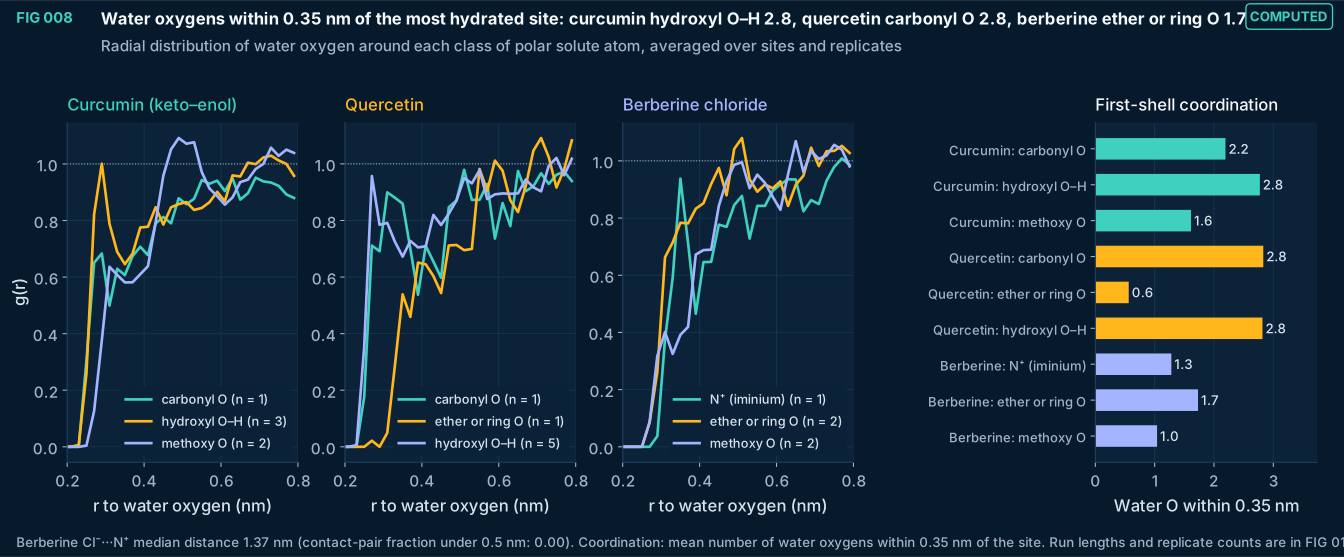
FIG 008Computed
Solvation structure from explicit-solvent molecular dynamics with MMFF94s: radial distribution functions of water oxygen around the polar atoms of each solute, and first-shell coordination numbers. Coordination differs several-fold between site types; in curcumin the hydroxyl that takes part in the intramolecular enol hydrogen bond is partly shielded from water (FIG 009). These are the solute–solvent contacts that continuum solubility models average away.
Method, sources and limits
- Method
- g(r) from minimum-image distances in the cubic NPT box, frame-wise box length, 0.02 nm bins; averaged over equivalent sites and over replicates; coordination counted within 0.35 nm.
- Sources and code
- MMFF94s in OpenMM 8.6.1 (custom forces verified against RDKit), PME, Langevin 300 K, Monte Carlo barostat 1 bar, 2 fs; frames every 0.5 ps. Scripts 02_force_fields_and_MD/md_run.py and md_figs.py.
- Supports
- Which solute sites dominate hydration, as input to solubility and permeability reasoning.
- Does not support
- Quantitative hydration free energies or solubilities.
- Limitations
- Short trajectories (tens of picoseconds per replicate): adequate for first-shell structure and fast hydrogen-bond dynamics, not for conformational sampling or slow events.
- MMFF94s with its own water parameters, not a dedicated water model such as TIP3P or OPC; water density and structure differ from experiment.
- One solute molecule per box; no concentration, aggregation or counter-ion pairing statistics beyond what a single ion shows.
Vector (SVG) · Full-size image · data (coordination) (CSV) · data (rdf) (CSV)
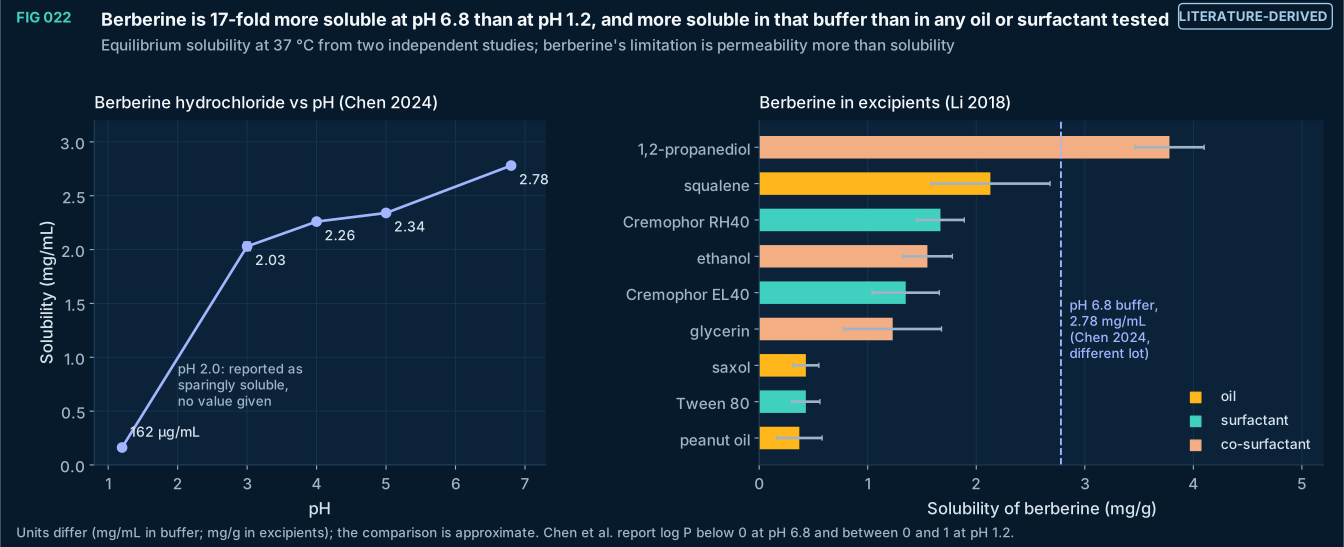
FIG 022Literature-derived
Berberine hydrochloride solubility rises from 0.162 mg/mL at pH 1.2 to 2.78 mg/mL at pH 6.8 (Chen et al. 2024); in three oils and three surfactants it stays at or below 2.13 mg/g, and only 1,2-propanediol (3.78 mg/g) exceeds the pH 6.8 buffer value (Li et al. 2018). For a hydrophilic quaternary cation, lipid systems act mainly on permeability and transport, not on dissolution.
Method, sources and limits
- Method
- Published values re-plotted; no fitting.
- Sources and code
- Chen X et al. Self-microemulsifying drug delivery system to enhance oral bioavailability of berberine hydrochloride in rats. Pharmaceutics 2024;16(9):1116. doi:10.3390/pharmaceutics16091116. PMID 39339154, PMC11435259 Li J et al. Self-nanoemulsifying system improves oral absorption and enhances anti-acute myeloid leukemia activity of berberine. J Nanobiotechnology 2018;16:76. doi:10.1186/s12951-018-0402-x. PMID 30290822, PMC6172716 Script 05_delivery_QbD/form_figs.py; transcriptions in form_data.py; source XML in 00_provenance/literature.
- Supports
- Framing berberine as a permeability-limited rather than solubility-limited problem in intestinal conditions.
- Does not support
- Claims about absorption mechanisms of any formulation.
- Limitations
- Two laboratories, different material lots and media; mg/mL and mg/g are not interchangeable without densities.
- Gastric solubility at pH 2.0 was not reported numerically.
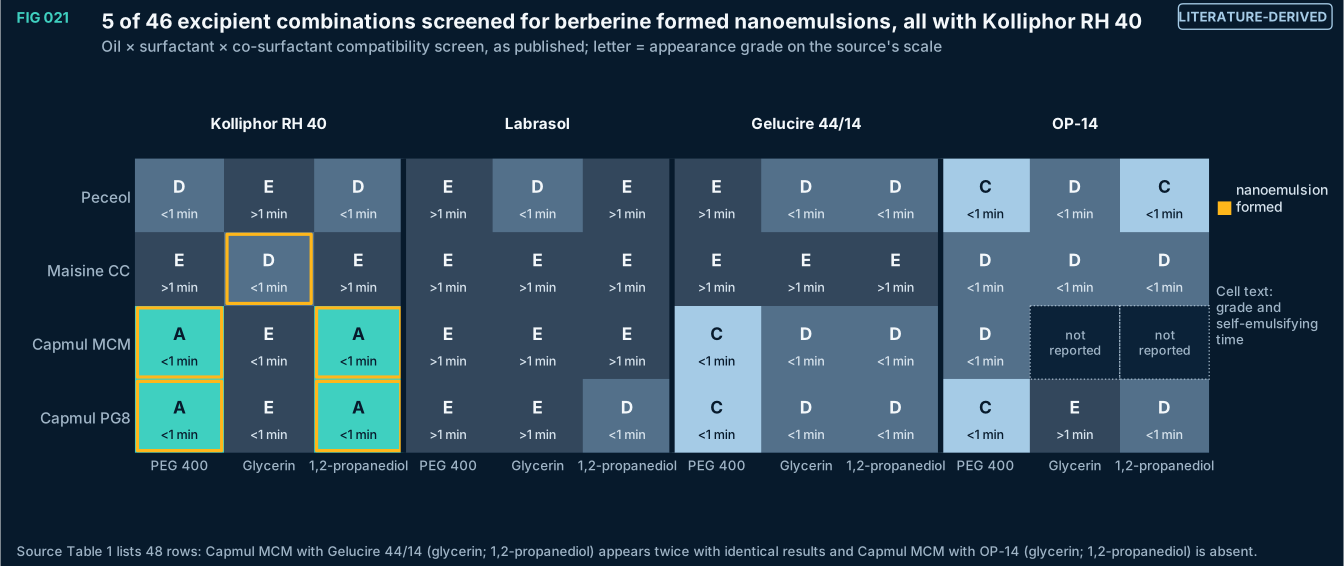
FIG 021Literature-derived
Excipient compatibility screen for berberine hydrochloride SMEDDS (Chen et al. 2024, Table 1). Only combinations with Kolliphor RH 40 formed nanoemulsions; the authors' final formulation was Capmul MCM 55%, Kolliphor RH 40 22.5% and 1,2-propanediol 22.5% (w/w). Two rows of the published table are duplicates and two combinations are missing.
Method, sources and limits
- Method
- Published table re-plotted without modification; duplicates detected programmatically.
- Sources and code
- Chen X et al. Self-microemulsifying drug delivery system to enhance oral bioavailability of berberine hydrochloride in rats. Pharmaceutics 2024;16(9):1116. doi:10.3390/pharmaceutics16091116. PMID 39339154, PMC11435259 Script 05_delivery_QbD/form_figs.py; transcriptions in form_data.py; source XML in 00_provenance/literature.
- Supports
- Kolliphor RH 40 as the decisive excipient in this screen.
- Does not support
- Generalization to other berberine salts, doses or excipient grades.
- Limitations
- Visual grading on the source's scale; the grading definitions are those of the source.
- Single laboratory, blank (drug-free) and drug-loaded behavior can differ.
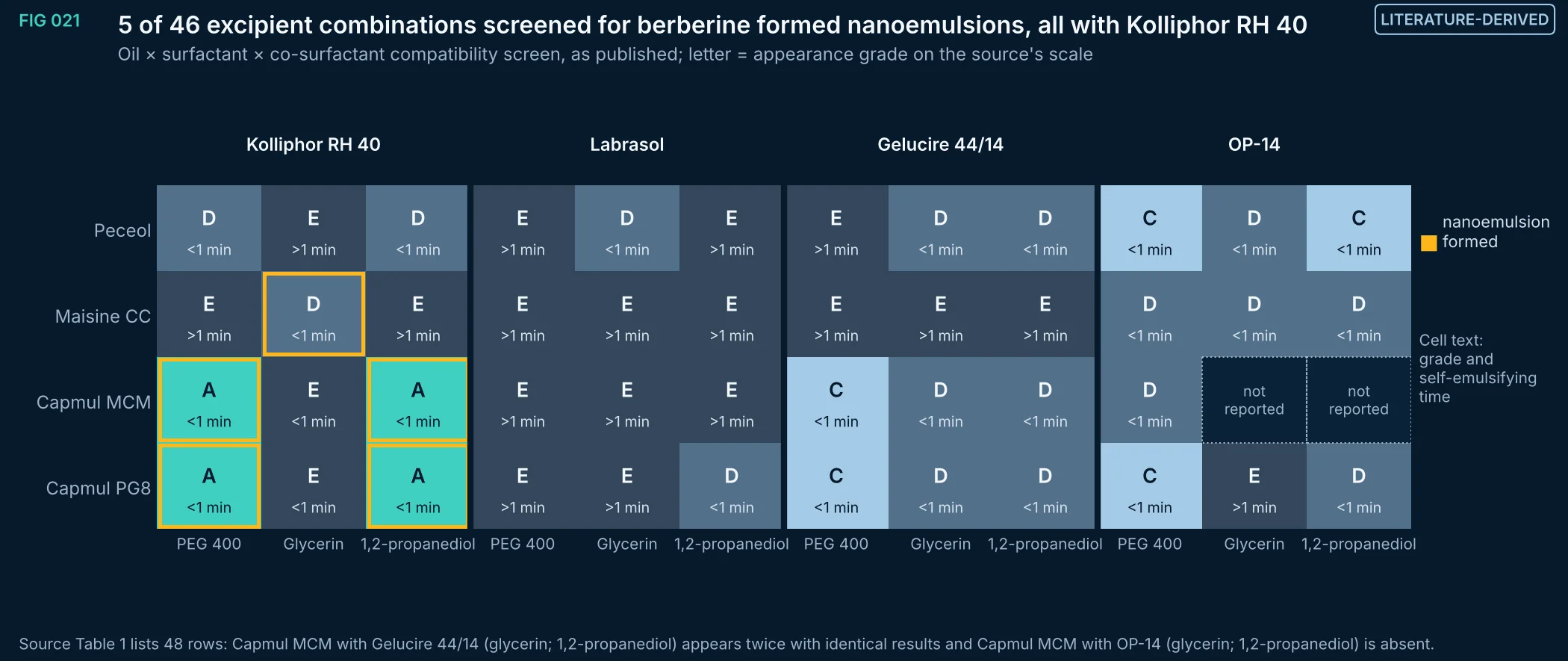
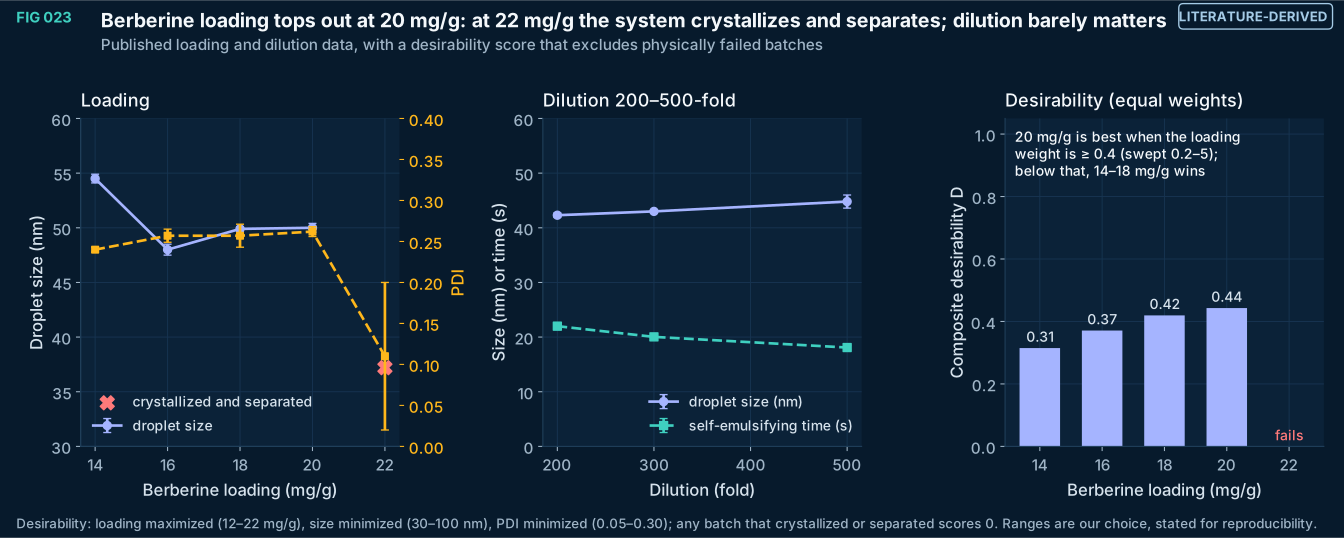
FIG 023Literature-derived
Droplet size and polydispersity of berberine SMEDDS at 14–22 mg/g drug and after 200–500-fold dilution (Chen et al. 2024, Tables 2 and 3). At 22 mg/g the system crystallized and separated on centrifugation; its smaller droplet size does not make it a better batch. A Derringer desirability score with a feasibility gate picks 20 mg/g, the loading the authors used, with equal weights; with loading weighted at 0.3 or less relative to size and PDI, 14–18 mg/g scores higher.
Method, sources and limits
- Method
- Published means ± SD re-plotted; Derringer–Suich desirability (geometric mean of one-sided linear desirabilities) with a hard feasibility constraint; weight sweep on the loading term.
- Sources and code
- Chen X et al. Self-microemulsifying drug delivery system to enhance oral bioavailability of berberine hydrochloride in rats. Pharmaceutics 2024;16(9):1116. doi:10.3390/pharmaceutics16091116. PMID 39339154, PMC11435259 Script 05_delivery_QbD/form_figs.py; transcriptions in form_data.py; source XML in 00_provenance/literature.
- Supports
- Treating physical stability as a constraint rather than one more response to average.
- Does not support
- Long-term stability or in vivo performance at any loading.
- Limitations
- Five loadings and three dilutions, n = 3 each; no replicate batches.
- Desirability ranges are analyst choices.
Vector (SVG) · Full-size image · data (dilution) (CSV) · data (loading) (CSV)
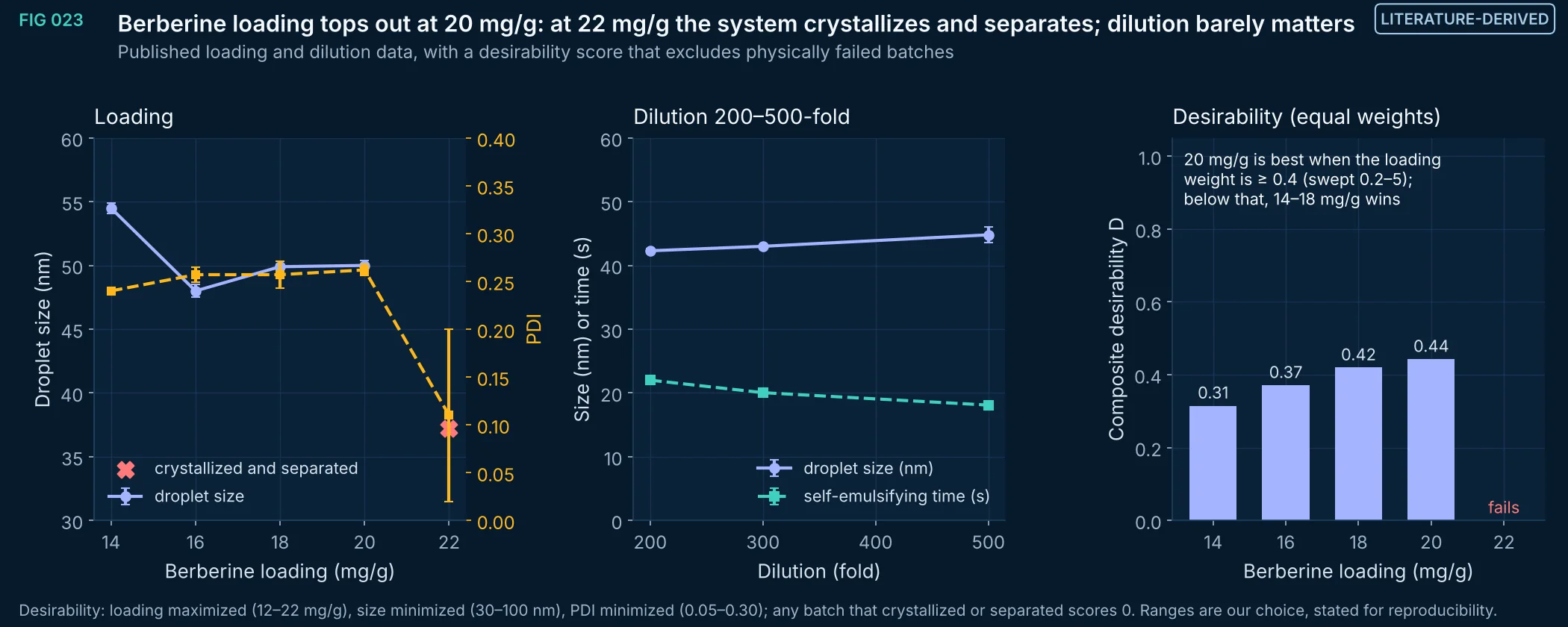
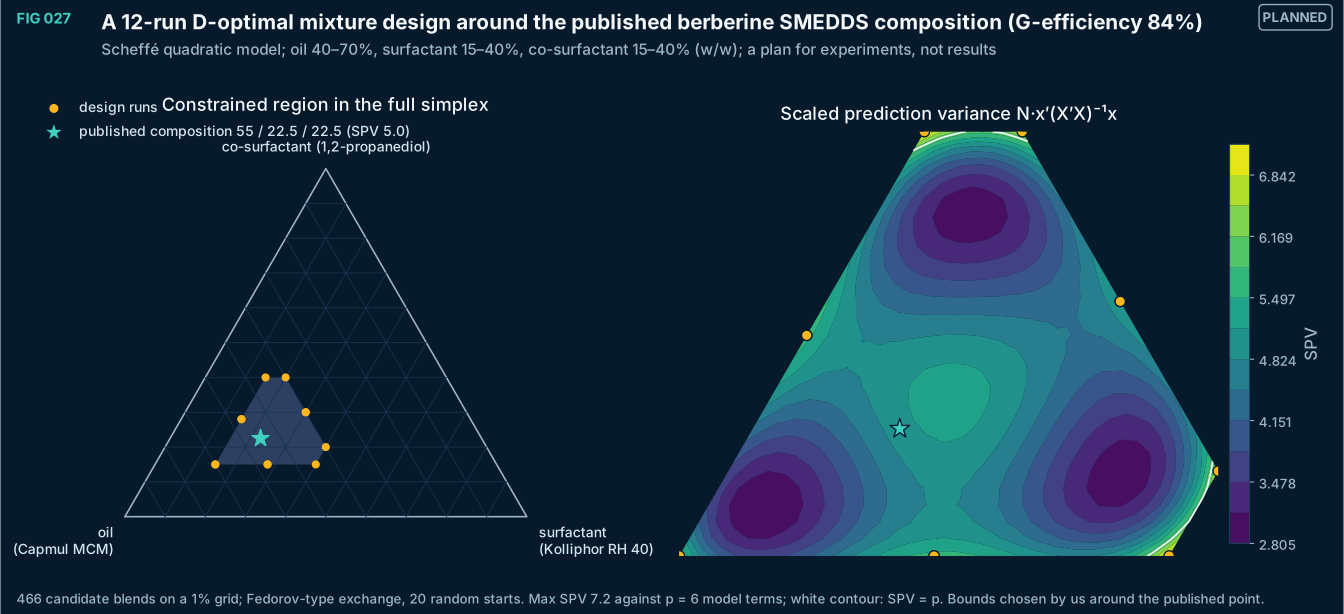
FIG 027Planned
A D-optimal 12-run design for a Scheffé quadratic mixture model in the oil–surfactant–co-surfactant region around the published berberine SMEDDS composition. Scaled prediction variance stays at or below 7.2 across the region (G-efficiency 84%), and is 5.0 at the published point. This is a plan for measuring droplet size, emulsification time and drug loading, not a result.
Method, sources and limits
- Method
- Candidate set on a 1% grid within bounds; exchange algorithm maximizing log det(X′X) for the 6-term Scheffé quadratic; prediction variance evaluated on all candidates.
- Sources and code
- Published composition: Chen X et al. Self-microemulsifying drug delivery system to enhance oral bioavailability of berberine hydrochloride in rats. Pharmaceutics 2024;16(9):1116. doi:10.3390/pharmaceutics16091116. PMID 39339154, PMC11435259 Bounds are analyst assumptions. Script 05_delivery_QbD/form_figs.py; transcriptions in form_data.py; source XML in 00_provenance/literature.
- Supports
- An efficient experiment to map the SMEDDS region rather than one-factor-at-a-time testing.
- Does not support
- Any predicted droplet size or stability.
- Limitations
- No responses exist for these blends; the design only guarantees how well a quadratic model could be estimated.
- Bounds and model order are assumptions; a special-cubic term may be needed.
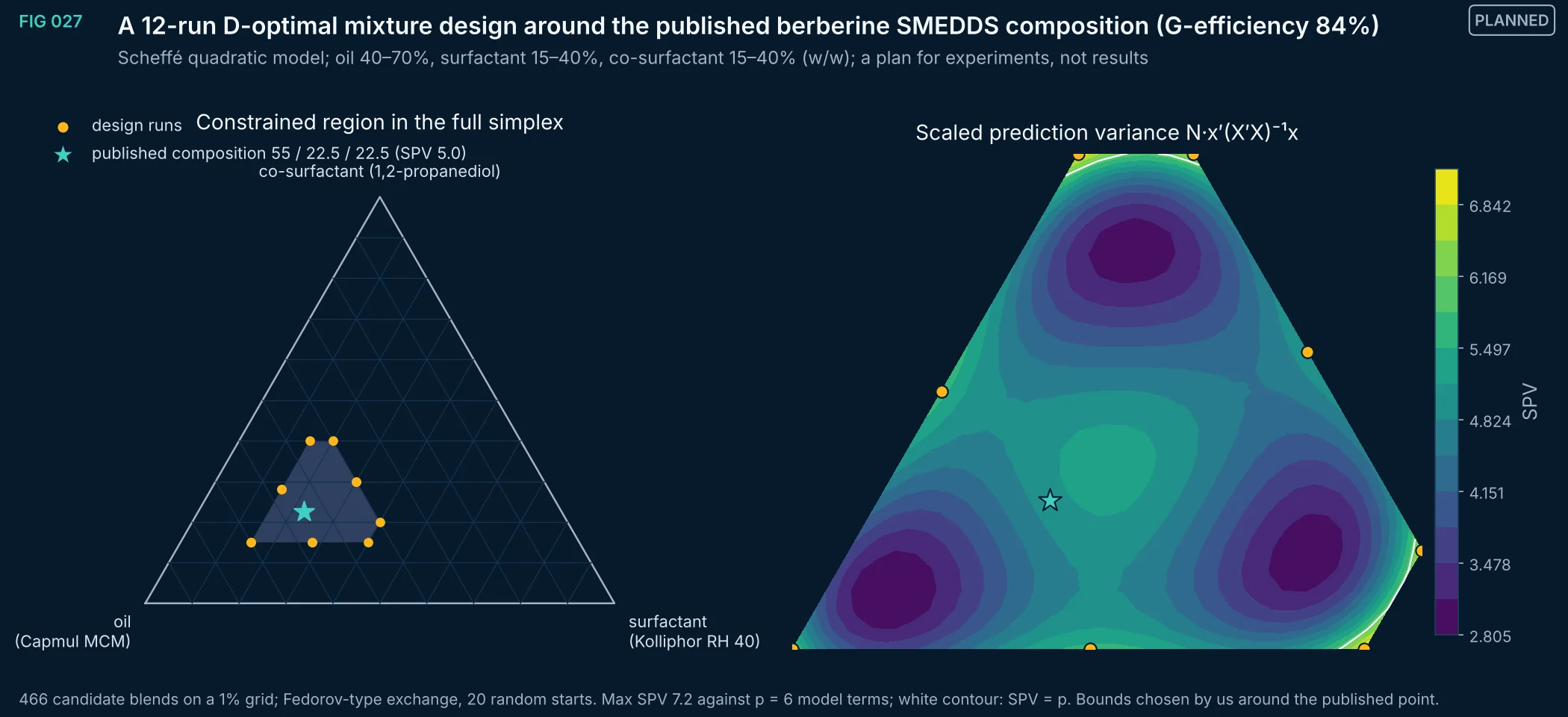
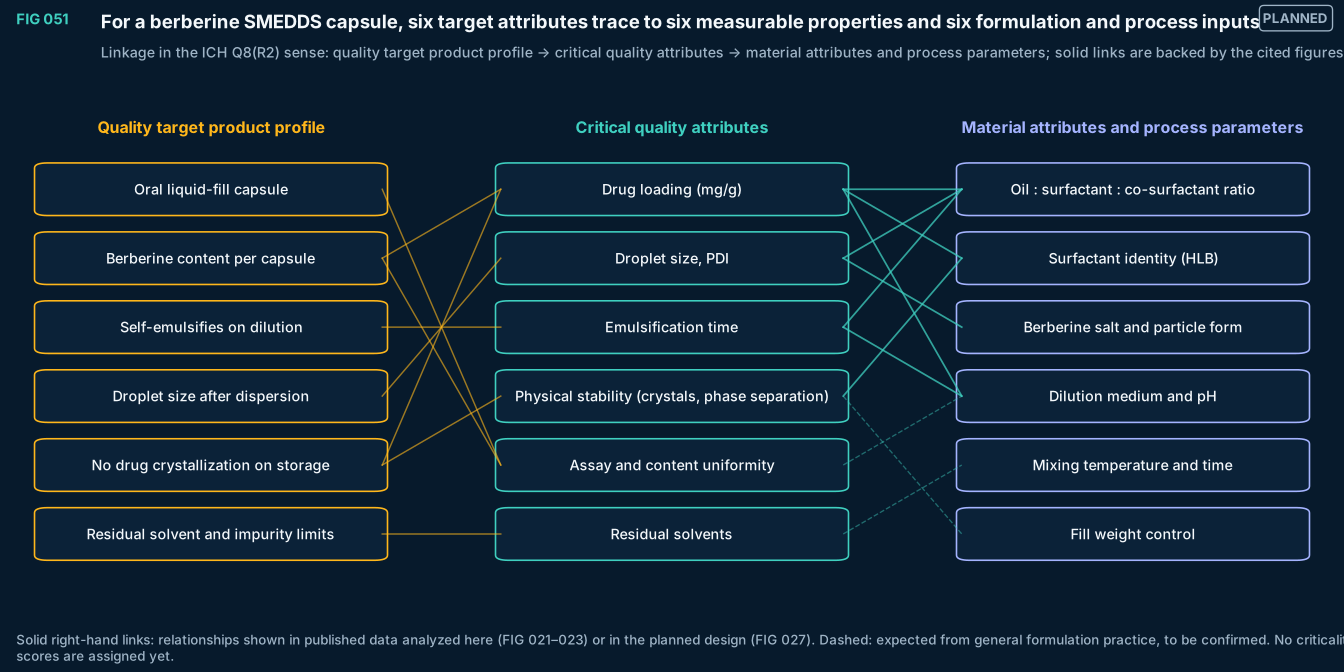
FIG 051Planned
A first linkage map for a berberine self-microemulsifying capsule, following the ICH Q8(R2) structure: what the product must do, the measurable attributes that express it, and the formulation and process inputs that control them. Links supported by the published data analyzed in this note are drawn solid; others are hypotheses to test.
Method, sources and limits
- Method
- Structured mapping; evidence links taken from FIG 021–023 and FIG 027.
- Sources and code
- ICH Q8(R2) Pharmaceutical Development (2009); ICH Q9(R1) Quality Risk Management (2023). Data sources as in FIG 021–023. Script 04_extraction_and_process/process_figs.py.
- Supports
- How development experiments would be prioritized.
- Does not support
- Any regulatory or product claim.
- Limitations
- Not a risk assessment: no severity, occurrence or detectability scores.
- Product concept only; no EUTECNIQ product of this kind exists.
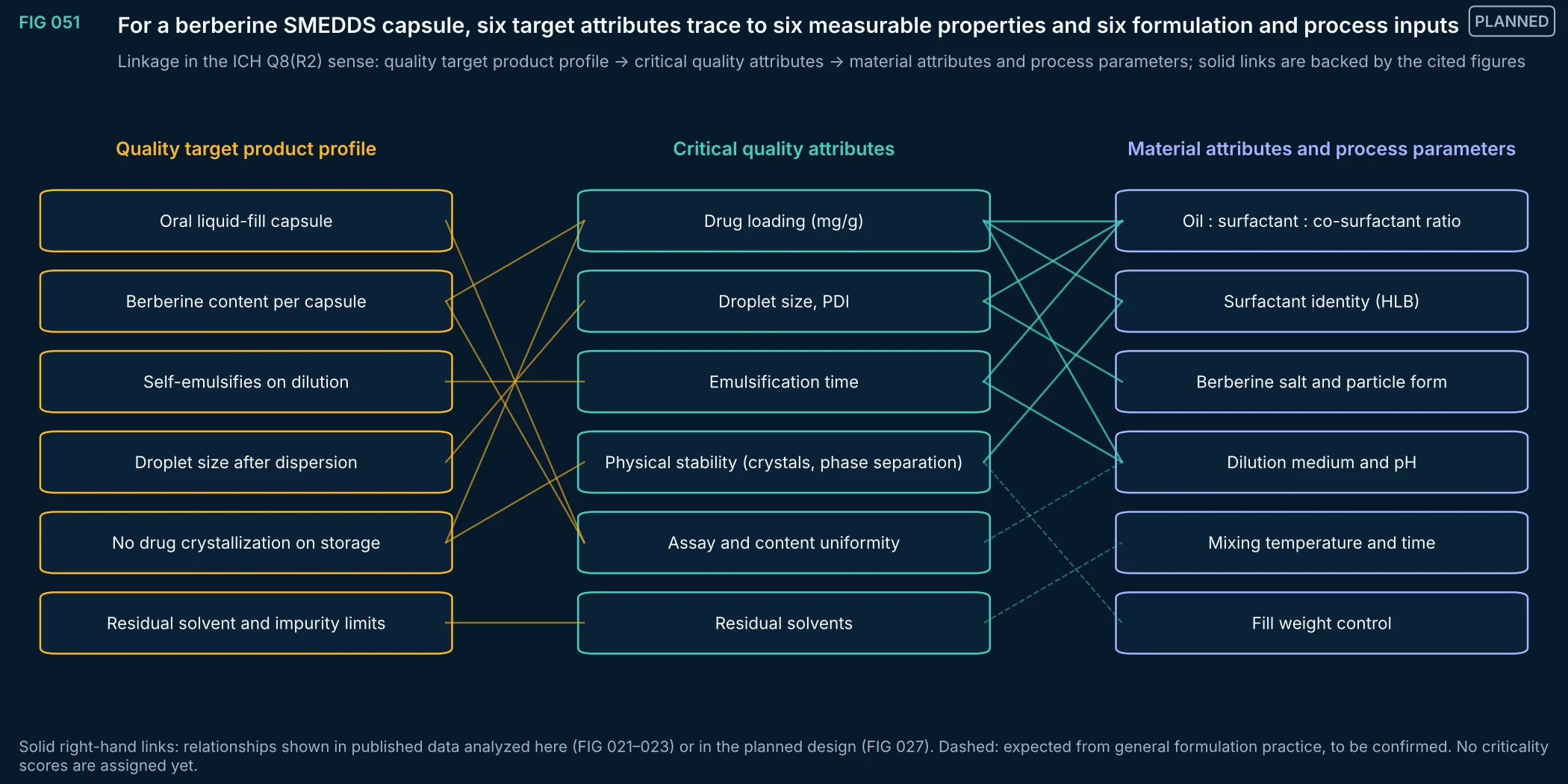
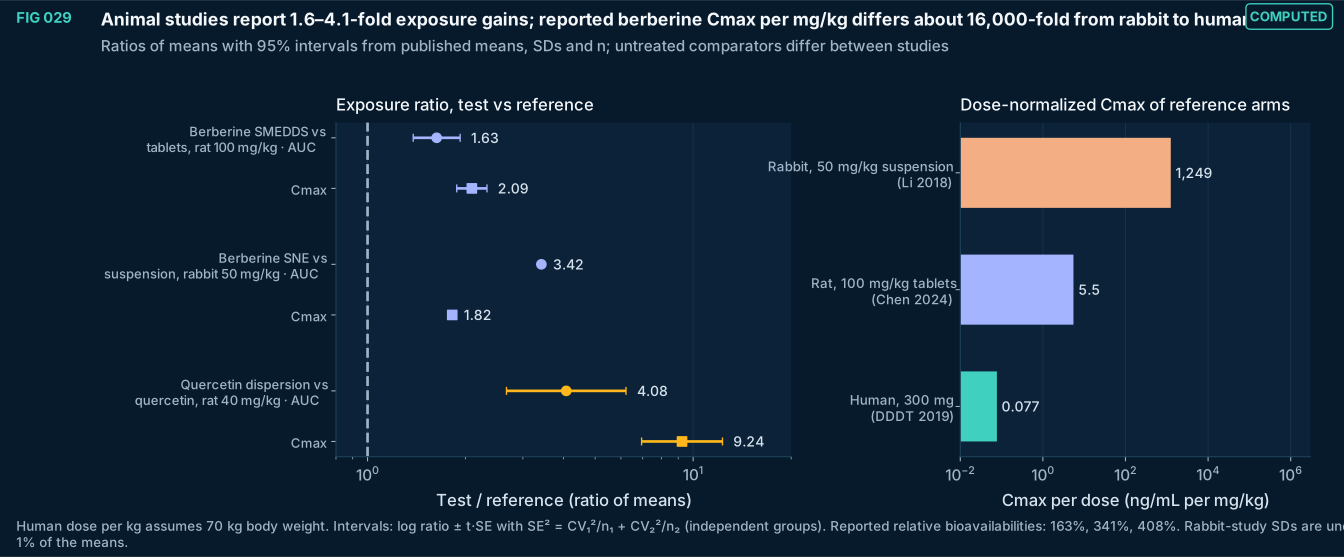
FIG 029Computed
Exposure ratios of formulated against reference arms in three animal studies (two berberine, one quercetin), with 95% intervals reconstructed from the published summary statistics, and the dose-normalized peak concentration of each berberine study's reference arm. Per mg/kg, the rat reference arm reports about 71 times and the rabbit arm about 16,000 times the human peak concentration, which signals large differences in species, dose, assay or analyte; fold changes from one model do not transfer to people.
Method, sources and limits
- Method
- Ratio of means with log-normal delta-method interval (t with n₁+n₂−2 df); dose normalization by mg/kg.
- Sources and code
- Chen X et al. Self-microemulsifying drug delivery system to enhance oral bioavailability of berberine hydrochloride in rats. Pharmaceutics 2024;16(9):1116. doi:10.3390/pharmaceutics16091116. PMID 39339154, PMC11435259 Li J et al. Self-nanoemulsifying system improves oral absorption and enhances anti-acute myeloid leukemia activity of berberine. J Nanobiotechnology 2018;16:76. doi:10.1186/s12951-018-0402-x. PMID 30290822, PMC6172716 Guo et al. Formulation development and characterization of quercetin solid dispersions with integrated in vitro release and in vivo pharmacokinetic assessment. Pharmaceuticals 2026;19(10):1625. doi:10.3390/ph19101625. PMID 42943322, PMC13708282 Human berberine: DDDT 2019;13:129 (FIG 032). Script 05_delivery_QbD/form_figs.py; transcriptions in form_data.py; source XML in 00_provenance/literature.
- Supports
- Treating animal fold changes as hypothesis-generating; the need for human data on any formulation claim.
- Does not support
- Any human bioavailability claim for these formulations.
- Limitations
- Summary statistics only; individual data unavailable.
- Different comparators (tablets, suspension, unformulated powder) and assays (HPLC-UV vs UPLC-MS/MS).
- Human body weight assumed.
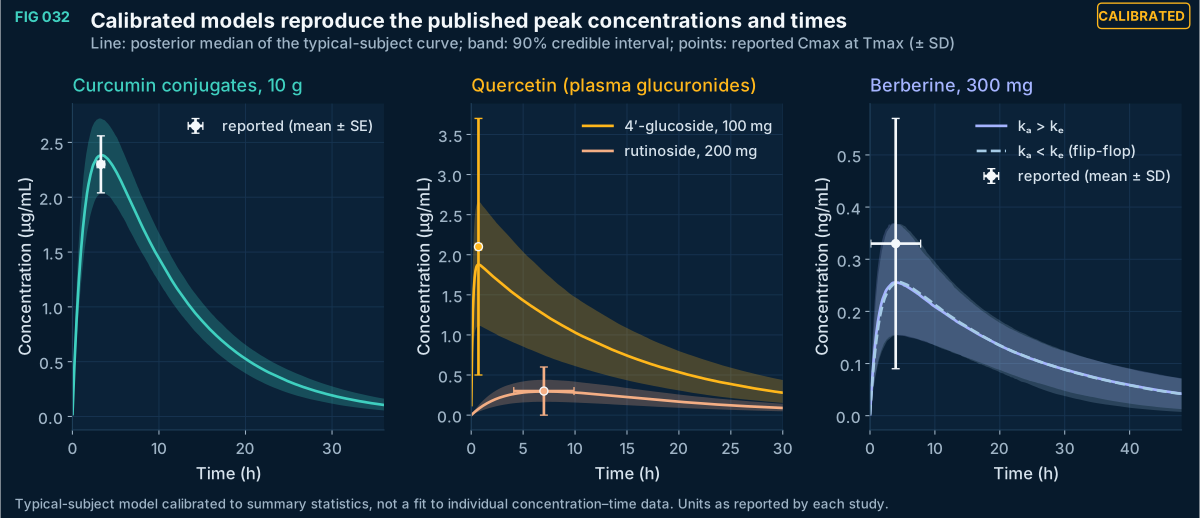
FIG 032Calibrated
Posterior median and 90% interval of the typical-subject concentration–time curve for each dataset, with the reported Cmax and Tmax.
Method, sources and limits
- Method
- PyMC 6.4 NUTS, 4 chains × 2,000 draws after 2,000 tuning steps; likelihood on reported summary statistics (SE = SD/√n).
- Sources and code
- Data: Vareed et al., Cancer Epidemiol Biomarkers Prev 2008;17:1411–1417; iScience 2025;28:112575.; Data: Graefe et al., J Clin Pharmacol 2001;41:492–499 (n = 12 crossover).; Data: Li G, Zhao M, Qiu F, Sun Y, Zhao L. Pharmacokinetic interactions and tolerability of berberine chloride with simvastatin and fenofibrate: an open-label, randomized, parallel study in healthy Chinese subjects. Drug Des Devel Ther 2019;13:129–139. doi:10.2147/DDDT.S185487 (berberine 300 mg single dose, n = 12, Table 6).
- Supports
- The model structures can reproduce the reported summary statistics.
- Does not support
- Any claim about individual subjects or untested formulations.
- Limitations
- Reported means of individual Cmax and Tmax are not the Cmax and Tmax of a mean curve (Jensen gap).
- Quercetin values are plasma glucuronides; no free quercetin was detected in that study.
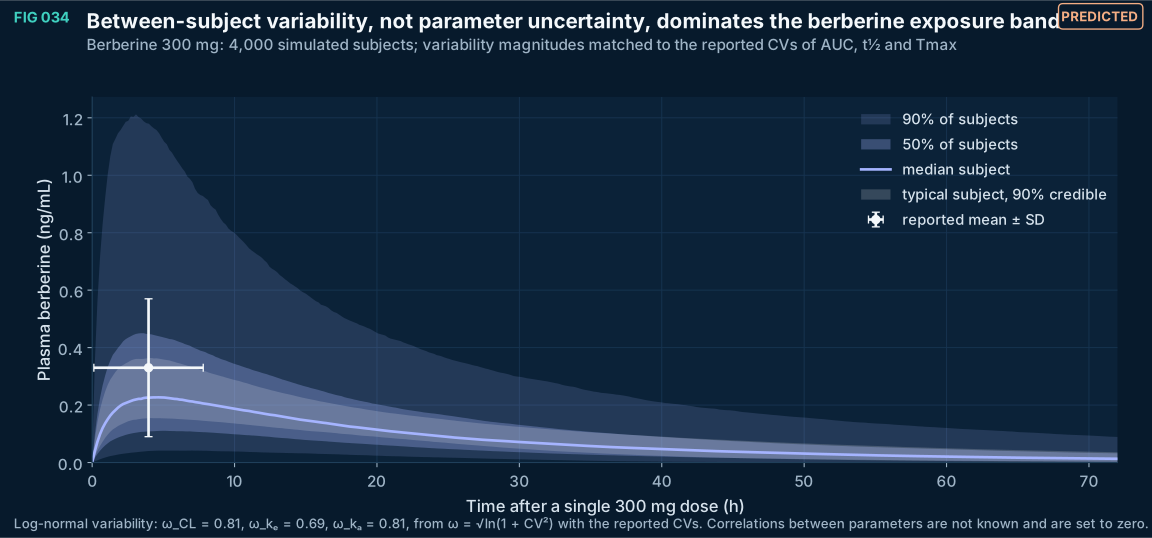
FIG 034Predicted
Simulated concentration–time percentiles for 4,000 subjects after 300 mg berberine, compared with the typical-subject credible band and the reported summary point.
Method, sources and limits
- Method
- Monte Carlo: posterior draws of the typical-subject parameters combined with log-normal between-subject variability (moment-matched to reported CVs).
- Sources and code
- Data: Li G, Zhao M, Qiu F, Sun Y, Zhao L. Pharmacokinetic interactions and tolerability of berberine chloride with simvastatin and fenofibrate: an open-label, randomized, parallel study in healthy Chinese subjects. Drug Des Devel Ther 2019;13:129–139. doi:10.2147/DDDT.S185487 (berberine 300 mg single dose, n = 12, Table 6).
- Supports
- The width of plausible individual exposure after 300 mg.
- Does not support
- Exposure at other doses, in patients or with food.
- Limitations
- Variability magnitudes are moment-matched, not estimated from individual data; parameter correlations assumed zero.
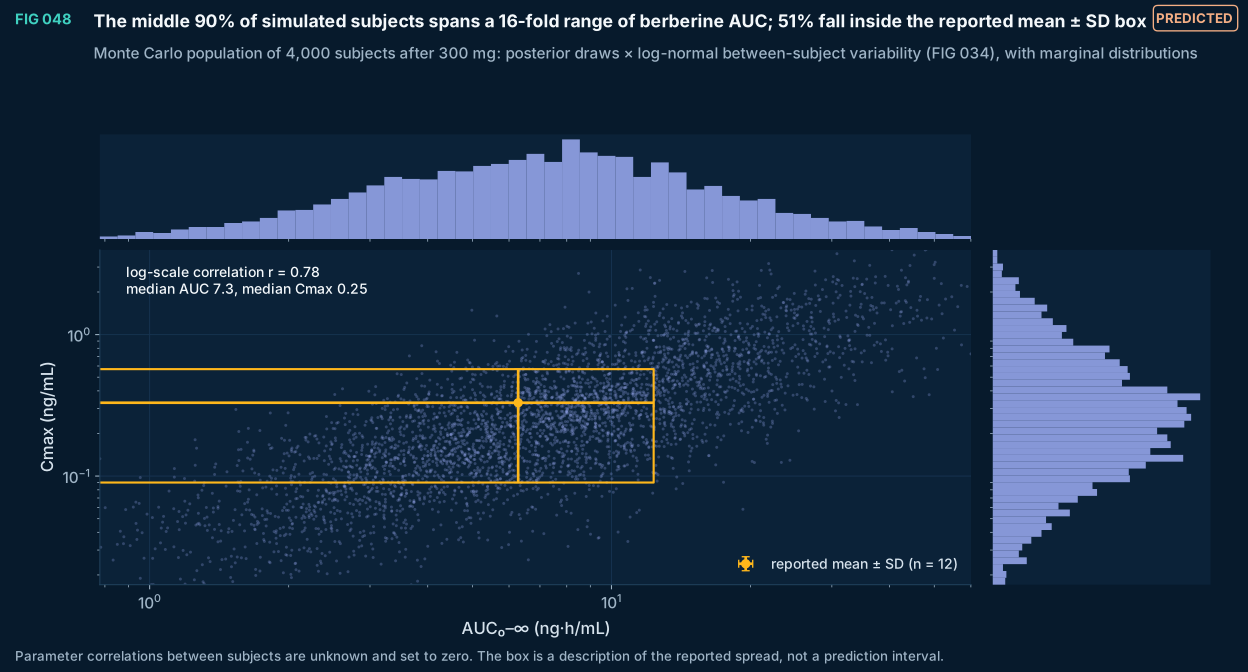
FIG 048Predicted
Joint distribution of AUC and Cmax in a simulated population given berberine 300 mg, combining posterior uncertainty in the typical-subject model with between-subject variability matched to the reported coefficients of variation. Marginal histograms show the skewed, log-normal shape that a mean ± SD summary hides.
Method, sources and limits
- Method
- Posterior draws from the summary-level calibration (FIG 035) × independent log-normal variability on CL/F, kₑ and kₐ; analytic Bateman Cmax and AUC.
- Sources and code
- Li G, Zhao M, Qiu F, Sun Y, Zhao L. Pharmacokinetic interactions and tolerability of berberine chloride with simvastatin and fenofibrate: an open-label, randomized, parallel study in healthy Chinese subjects. Drug Des Devel Ther 2019;13:129–139. doi:10.2147/DDDT.S185487 (berberine 300 mg single dose, n = 12, Table 6). Scripts 06_PK_PBPK/pk_fit.py and 07_MCMC_uncertainty/mc_figs.py.
- Supports
- Expect wide between-subject exposure differences in any berberine study and size studies accordingly.
- Does not support
- Exposure of any formulation other than the studied one.
- Limitations
- Variability magnitudes inferred from summary CVs, not from individual data.
- No covariates (sex, body weight, genotype, food).
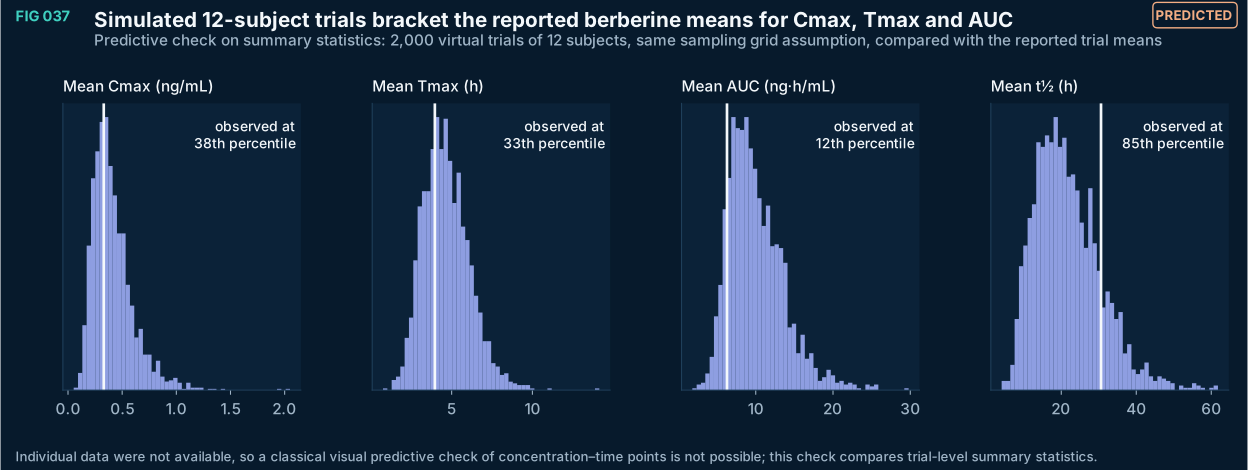
FIG 037Predicted
Fill the empty Supports / Does not support lists for FIG 037, FIG 039 and FIG 045 (e.g., FIG 037 Supports: 'That the calibrated model reproduces 12-subject trial means'; Does not support: 'Validation against independent concentration–time data'), or hide the headings when the list is empty.
Method, sources and limits
- Method
- Posterior draw per trial plus log-normal between-subject variability; sampling grid 0.25–72 h assumed.
- Sources and code
- Data: Li G, Zhao M, Qiu F, Sun Y, Zhao L. Pharmacokinetic interactions and tolerability of berberine chloride with simvastatin and fenofibrate: an open-label, randomized, parallel study in healthy Chinese subjects. Drug Des Devel Ther 2019;13:129–139. doi:10.2147/DDDT.S185487 (berberine 300 mg single dose, n = 12, Table 6).
- Supports
- Does not support
- Limitations
- Not a VPC on observed concentration–time data.
- The sampling schedule of the study is assumed.
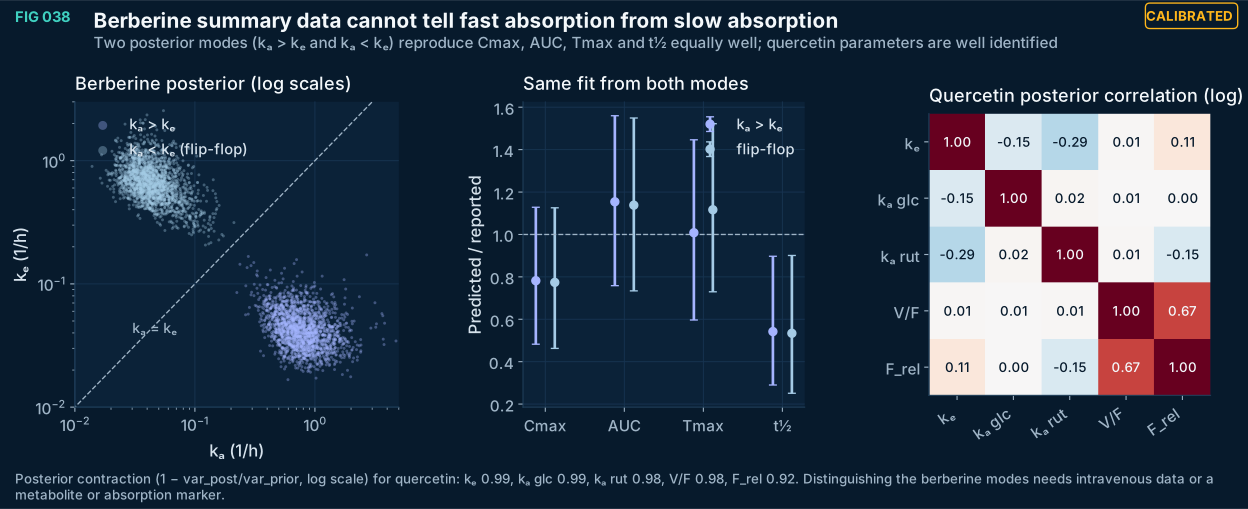
FIG 038Calibrated
Flip-flop non-identifiability of berberine absorption and elimination, and the posterior correlation structure of the quercetin model.
Method, sources and limits
- Method
- Two constrained fits (kₐ > kₑ, kₐ < kₑ); Pearson correlation of log posterior draws; contraction relative to the prior.
- Sources and code
- Data: Li G, Zhao M, Qiu F, Sun Y, Zhao L. Pharmacokinetic interactions and tolerability of berberine chloride with simvastatin and fenofibrate: an open-label, randomized, parallel study in healthy Chinese subjects. Drug Des Devel Ther 2019;13:129–139. doi:10.2147/DDDT.S185487 (berberine 300 mg single dose, n = 12, Table 6).; Data: Graefe et al., J Clin Pharmacol 2001;41:492–499 (n = 12 crossover).
- Supports
- Oral summary data alone cannot establish the rate-limiting step of berberine disposition.
- Does not support
- Any mechanism of berberine absorption or elimination.
- Limitations
- Prior-dependent contraction values.
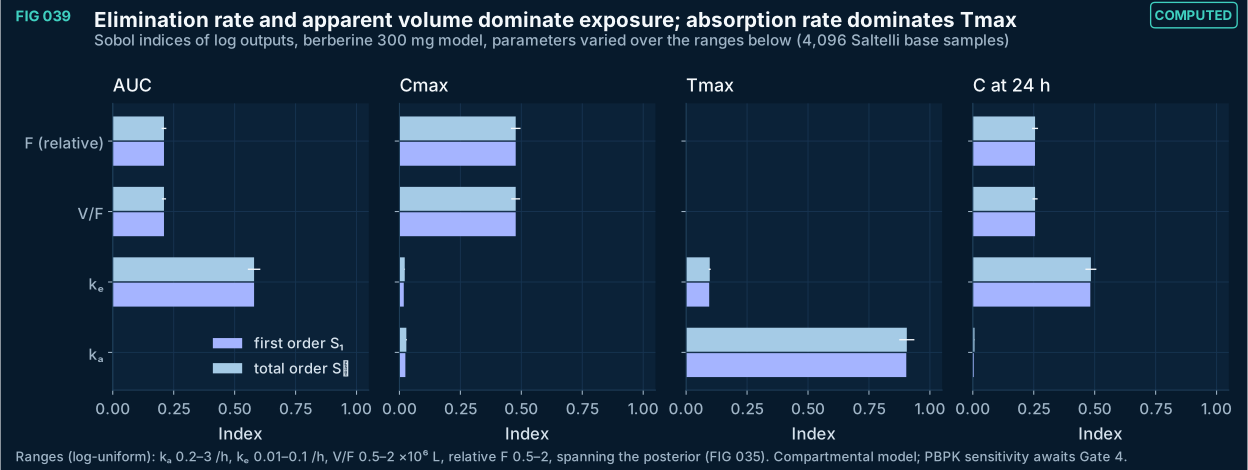
FIG 039Computed
First- and total-order Sobol indices for AUC, Cmax, Tmax and the 24 h concentration of the berberine model.
Method, sources and limits
- Method
- SALib Saltelli sampling and Sobol analysis on log-transformed outputs; 95% bootstrap intervals for Sᴛ.
- Sources and code
- Deduplicate the list to one entry per source (Bernabé-Pineda 2004; Berga 2023; Krasnov BigSolDB 2.0 and its row sources; Hansen 2007; Chen 2024; Li 2018; Guo 2026; Dechayont 2026; Wang 1997; Li G 2019 DDDT; Graefe 2001; Vareed 2008; Kroon 2025; Ghia 1982; Crank 1975; ICH M9, Q3C(R8), Q8(R2), Q9(R1); Rothwell 2005) and remove 'Model calibrated in FIG 032–035.' and 'PK fits, this study.'
- Supports
- Does not support
- Limitations
- Compartmental, not PBPK.
- Indices depend on the chosen ranges.
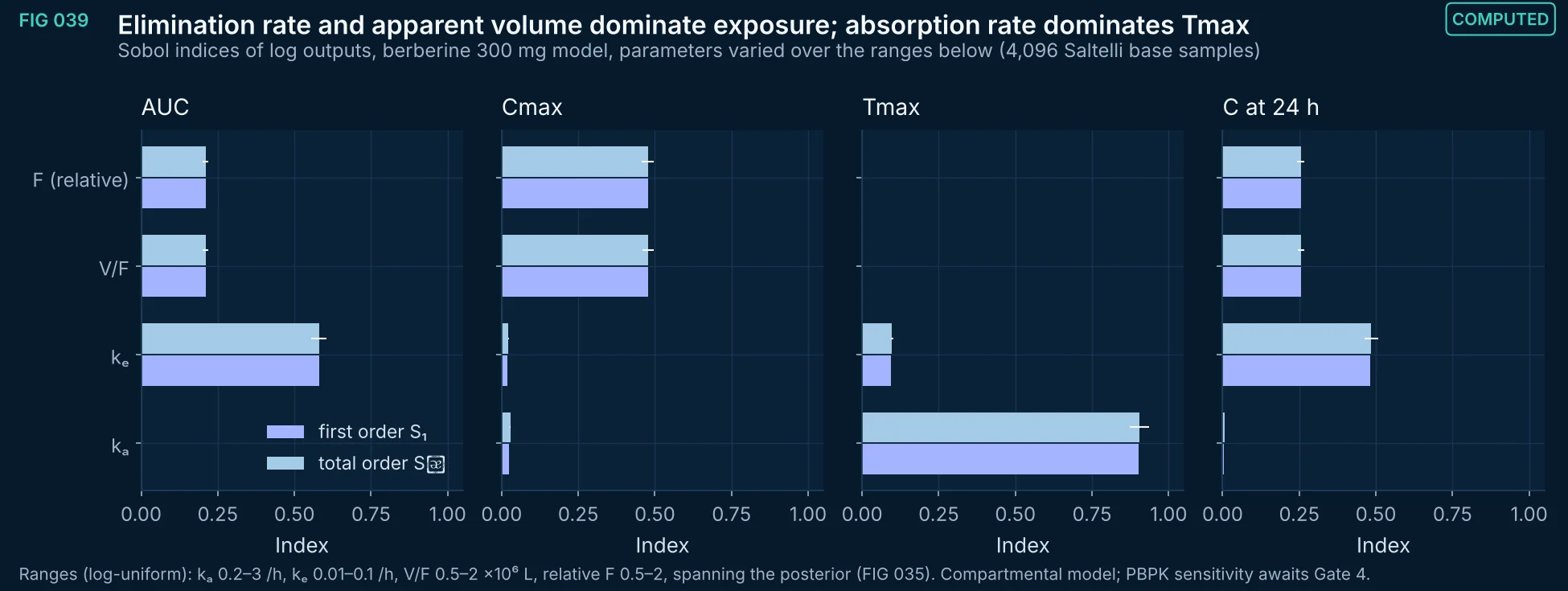
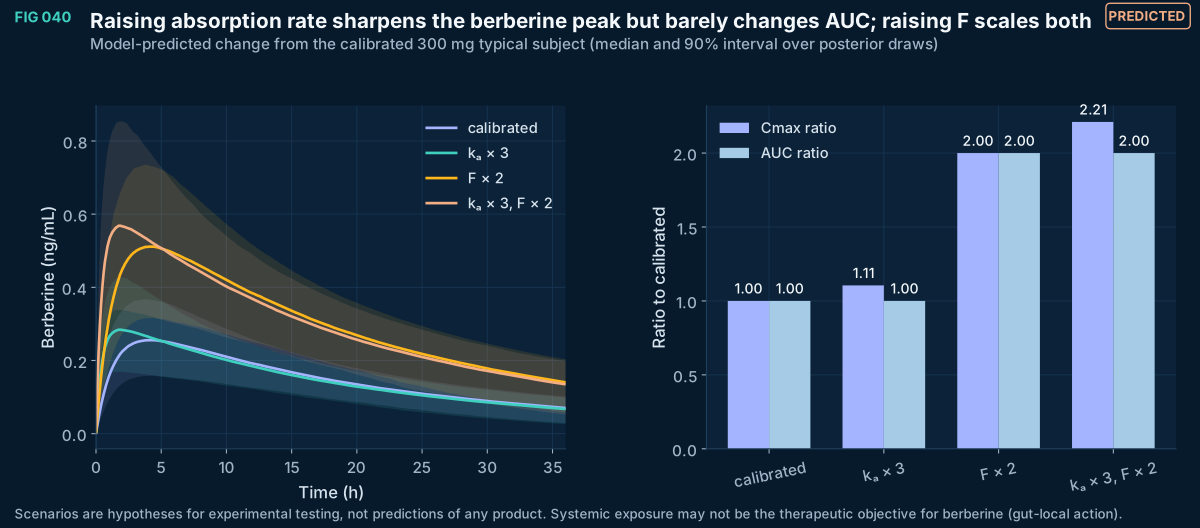
FIG 040Predicted
Predicted concentration–time curves and Cmax/AUC ratios when the absorption rate or the relative bioavailability of berberine is changed.
Method, sources and limits
- Method
- Calibrated posterior with kₐ or F multiplied; all else unchanged.
- Sources and code
- Data: Li G, Zhao M, Qiu F, Sun Y, Zhao L. Pharmacokinetic interactions and tolerability of berberine chloride with simvastatin and fenofibrate: an open-label, randomized, parallel study in healthy Chinese subjects. Drug Des Devel Ther 2019;13:129–139. doi:10.2147/DDDT.S185487 (berberine 300 mg single dose, n = 12, Table 6).
- Supports
- Which kinetic lever a formulation would have to move to change Cmax vs AUC.
- Does not support
- That any formulation achieves these changes.
- Limitations
- Assumes linear kinetics and unchanged elimination.
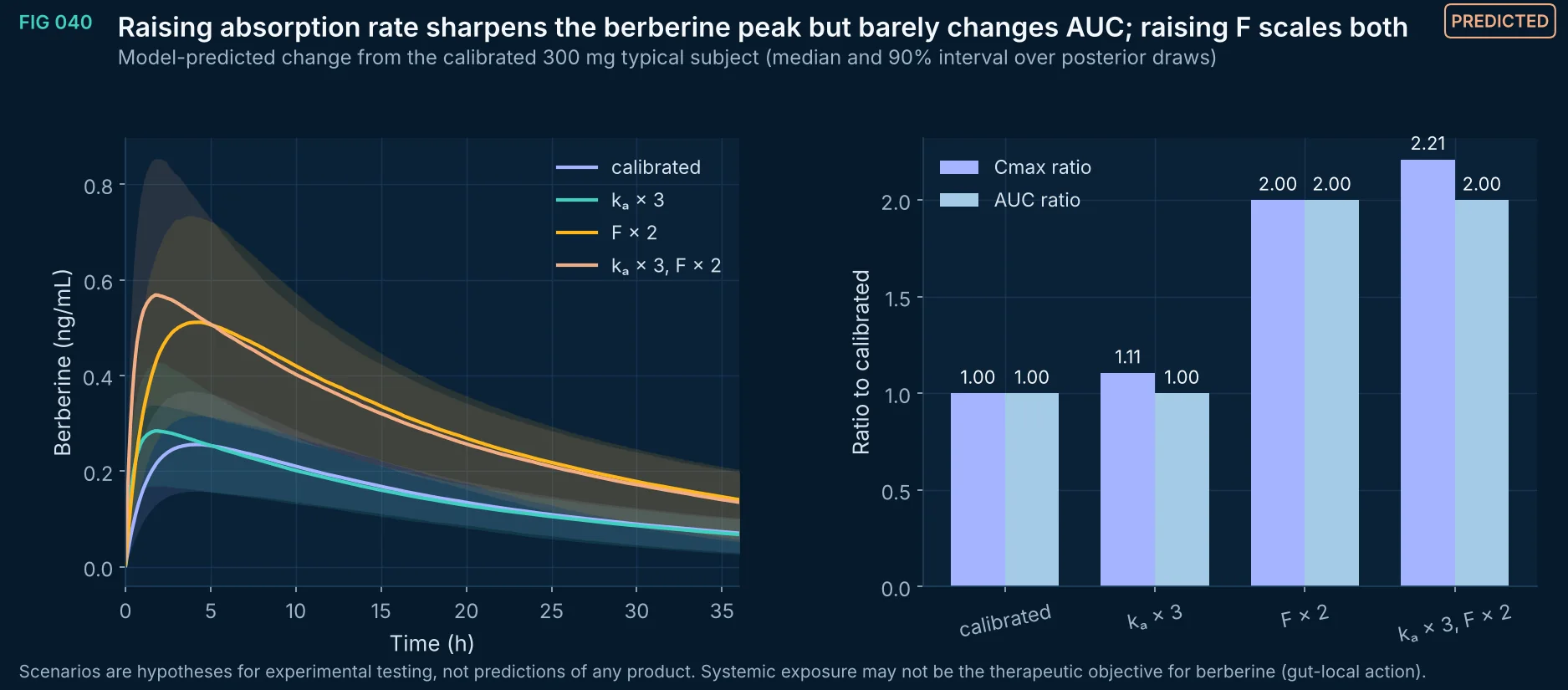
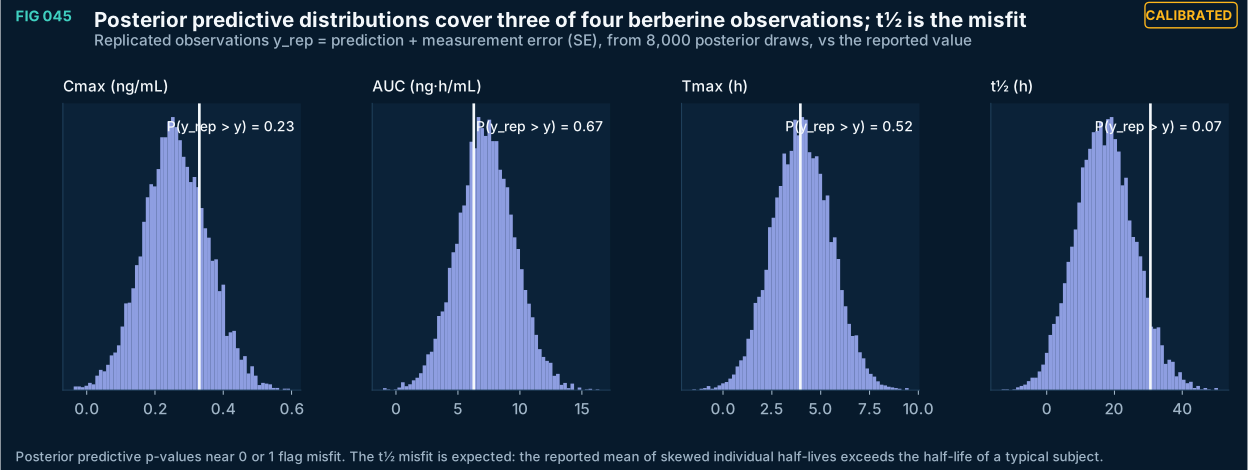
FIG 045Calibrated
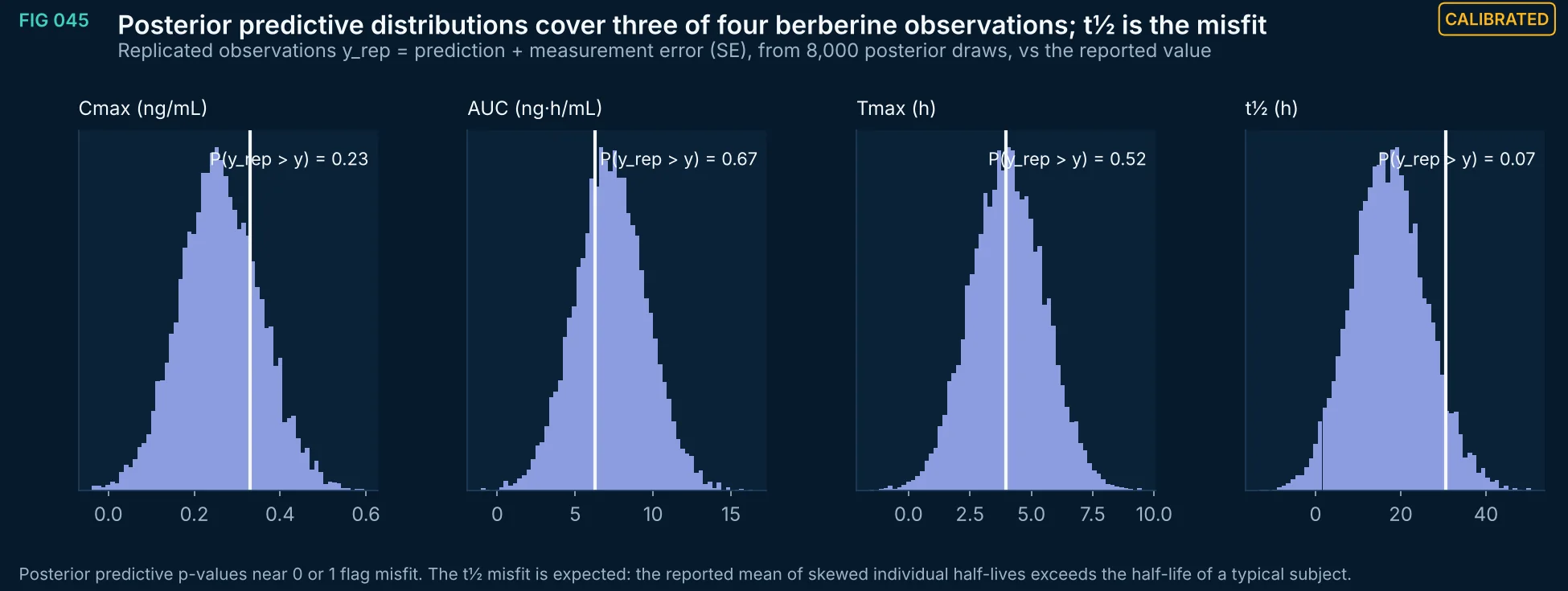
Posterior predictive distributions of the four berberine summary statistics with the observed values and posterior predictive p-values.
Method, sources and limits
- Method
- y_rep = posterior prediction + N(0, SE) measurement error.
- Sources and code
- Data: Li G, Zhao M, Qiu F, Sun Y, Zhao L. Pharmacokinetic interactions and tolerability of berberine chloride with simvastatin and fenofibrate: an open-label, randomized, parallel study in healthy Chinese subjects. Drug Des Devel Ther 2019;13:129–139. doi:10.2147/DDDT.S185487 (berberine 300 mg single dose, n = 12, Table 6).
- Supports
- Does not support
- Limitations
- Calibration data, not independent data.
Interpretation
What the results support, and what they do not
Supported
- Mapping the SMEDDS composition space with a designed experiment instead of one-factor screens.
- Sizing any berberine study for wide between-subject variability.
- Measuring metabolites or using intravenous data to identify absorption kinetics.
Not supported
- A human bioavailability claim for any berberine formulation.
- Transferring animal fold changes to people.
Next step and significance
What to measure next, and why it matters for development
- Next step
- Run the D-optimal mixture design for droplet size, emulsification time and loading; then a human crossover study against a reference product measuring berberine and its main metabolites.
- Why it matters
- Because AUC in people is set mainly by elimination and volume, a formulation can change the shape of the curve more easily than the total exposure. Knowing that before a clinical study is the difference between a realistic and an unrealistic target.
Health information notice. These statements have not been evaluated by the Food and Drug Administration. Nothing on this site is intended to diagnose, treat, cure or prevent any disease, and nothing here is medical advice.
Read the full notice
The information is for general education only. It does not replace advice, diagnosis or treatment from a qualified health professional, or any medication a clinician has prescribed. Do not start, stop or change any medicine, supplement or herbal product because of something you read here. Talk to your doctor or pharmacist first, especially if you are pregnant or breastfeeding, have a medical condition, take any medicines, are preparing for surgery, or are caring for a child. Research findings, traditional uses and safety data are reported as their sources state them; they are not recommendations or claims about any product. If you think you may have a medical emergency, call your doctor or 911 at once.
EUTECNIQ Sciences sells no supplements or health products today and receives nothing from any product or ingredient mentioned on this site; any commercial interest it later has in an ingredient will be stated on that ingredient’s page.